
Recent Posts
-
![Meet TYM at K 2025 -The World’ s No.1 Trade Fair for Plastics and Rubber]() Meet TYM at K 2025 -The World’ s No.1 Trade Fair for Plastics and Rubber
Meet TYM at K 2025 -The World’ s No.1 Trade Fair for Plastics and RubberWelcome to the World’s No.1 Trade Fair for Plastics and Rubber -K 2025, taking place from October 8–15, 2025 at Messe Düsseldorf, Germany. As a professional LSR injection molding machine, mold, and robot solution provider, TYM Technology Co., Ltd. is proud to present our latest innovations at Booth 16E77.
09/23/2025
-
![Vacuum-Assisted Injection for Liquid Silicone: What It Actually Fixes, and Which Products Justify the Added Cost]() Vacuum-Assisted Injection for Liquid Silicone: What It Actually Fixes, and Which Products Justify the Added Cost
Vacuum-Assisted Injection for Liquid Silicone: What It Actually Fixes, and Which Products Justify the Added CostVacuum-assisted injection reduces micro-bubbles in liquid silicone parts, but it's not worth the added cost for every product. Here's how to decide.
08/19/2026
-
![When Mold Temperature Controller and Injection Machine Fall Out of Sync: Why Parts Still Show Localized Under-Cure Even When]() When Mold Temperature Controller and Injection Machine Fall Out of Sync: Why Parts Still Show Localized Under-Cure Even When "All Parameters Are Correct"
When Mold Temperature Controller and Injection Machine Fall Out of Sync: Why Parts Still Show Localized Under-Cure Even When "All Parameters Are Correct""All parameters correct" but still getting localized under-cure? Mold temperature controller and injection machine timing mismatch is a common hidden cause.
08/18/2026
-
![How Much A/B Mixing Ratio Error Causes Under-Cure in Liquid Silicone — and How Equipment-Level Monitoring Can Catch It]() How Much A/B Mixing Ratio Error Causes Under-Cure in Liquid Silicone — and How Equipment-Level Monitoring Can Catch It
How Much A/B Mixing Ratio Error Causes Under-Cure in Liquid Silicone — and How Equipment-Level Monitoring Can Catch ItSmall A/B mixing ratio errors in liquid silicone can cause under-cured parts without visible warning. Learn the tolerance thresholds and equipment monitoring methods.
08/15/2026
-
![Injection Pressure / Servo Pressure Sensor Drift: How Often Should It Be Calibrated?]() Injection Pressure / Servo Pressure Sensor Drift: How Often Should It Be Calibrated?
Injection Pressure / Servo Pressure Sensor Drift: How Often Should It Be Calibrated?Injection pressure and servo sensor drift can silently degrade LSR part quality. Learn the warning signs and a practical calibration schedule.
08/13/2026
-
![How to Verify Whether a Supplier's]() How to Verify Whether a Supplier's "Parts Per Hour" Claim Includes Color or Mold Changeover Time
How to Verify Whether a Supplier's "Parts Per Hour" Claim Includes Color or Mold Changeover TimeWhen comparing liquid silicone rubber (LSR) injection molding machines, almost every supplier quote includes a headline number: parts per hour, or cycles per hour. It looks like the easiest number to compare — until you realize it rarely means the same thing from one supplier to the next.
08/10/2026
-
Common Failure Modes in In-Mold Assembly (IMA) on Double-Color and Double-Material LSR Machines
In-mold assembly — molding a silicone component directly onto or around a second material within a single cycle — is one of the strongest arguments for double-color and double-material LSR machines. It eliminates a secondary bonding or assembly step, reduces labor, and improves consistency versus post-mold assembly. On paper, it sounds like a straightforward efficiency gain.
08/07/2026
-
Cold Runner Clogging in LSR Injection Molding: A Practical Troubleshooting Guide
Cold runner systems are one of the main reasons manufacturers choose liquid silicone rubber (LSR) injection molding over conventional runner designs — no gate vestige, no flash to trim, and lower material waste. But when a cold runner starts to clog, that advantage disappears fast: production stops, scrap rates climb, and every hour of downtime costs real money.
08/04/2026
-
![Pure Electric Servo Feeding System vs. Traditional Pneumatic Feeding: Which One Actually Saves You Money?]() Pure Electric Servo Feeding System vs. Traditional Pneumatic Feeding: Which One Actually Saves You Money?
Pure Electric Servo Feeding System vs. Traditional Pneumatic Feeding: Which One Actually Saves You Money?If you run an LSR (Liquid Silicone Rubber) injection molding line, the feeding system is easy to overlook — until it starts costing you scrap rate, downtime, and inconsistent shot weights. Two technologies dominate the market today: pneumatic (air-driven) feeding systems and pure electric servo feeding systems. Here's an honest, practical comparison to help you decide which fits your production line.
07/31/2026
-
![How to Choose an LSR OEM Manufacturing Partner: A Buyer's Checklist]() How to Choose an LSR OEM Manufacturing Partner: A Buyer's Checklist
How to Choose an LSR OEM Manufacturing Partner: A Buyer's ChecklistOutsourcing liquid silicone rubber production is as much a relationship decision as a technical one. A supplier can look strong on paper — certificates, equipment lists, a polished website — and still fall short once your product hits real production volume. Here's a practical checklist for evaluating an LSR OEM partner before you commit tooling and inventory to them.
07/29/2026





How to Select LSR Injection Molding Machine Tonnage
What clamping force does an LSR machine actually need?
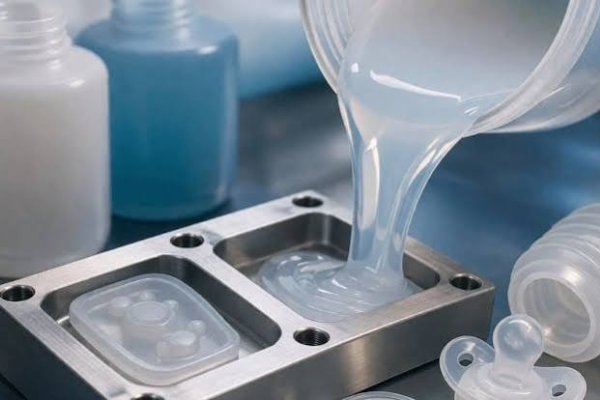
In short: enough to keep the mold closed against cavity pressure during fill and cure, plus a safety margin. Clamping force is calculated as the total projected area of all cavities and runners multiplied by the peak cavity pressure, then increased by 10-20%. LSR runs at far lower cavity pressures than thermoplastics, so silicone parts usually need a fraction of the tonnage a comparable plastic part would.
Cavity pressure in LSR molding commonly reaches up to roughly 300 bar (30 MPa), and unlike thermoplastics the cavity only needs to be filled to about 90-95% because the material expands as it cures to finish the surface. That low, controlled pressure is why a minimum practical clamp of around 290 kN (about 30 tons) is typical even for small LSR tools.
Why does projected area matter more than part weight?
Because clamping force resists the pressure trying to push the mold halves apart, and that force acts over the projected (shadow) area of the part, not its volume or weight. A thin, wide membrane can demand far more tonnage than a small, thick plug of the same mass. Always sum the projected area of every cavity plus the cold-runner footprint when sizing the machine.
What tonnage range fits common LSR applications?
The table below gives realistic starting points. Final tonnage still depends on your exact projected area, cavity count, and target cavity pressure.
Application | Typical part | Cavities | Typical clamp force |
Micro medical | Valves, duckbills, septa | 8-32 | 300-800 kN (30-80 t) |
Baby & infant care | Nipples, pacifiers | 4-16 | 800-1,800 kN (80-180 t) |
Automotive seals | Grommets, connectors | 2-8 | 1,500-3,000 kN (150-300 t) |
Industrial sealing | O-rings, gaskets | 8-48 | 1,000-3,500 kN (100-350 t) |
Large single parts | Diving masks, keypads | 1-2 | 2,000-5,000 kN (200-500 t) |
What else should you check besides tonnage?
Tonnage gets you in the door, but four other specs decide part quality and cost per part:
· Shot size and metering accuracy: the dosing/metering pump must hold the A:B ratio (typically 1:1) within tight tolerance for consistent cure.
· Platen and tie-bar spacing: confirm your mold's footprint and daylight fit, especially for cold-runner stacks and multi-cavity tools.
· Temperature control: heated platens and even mold heating to 170-200 C are essential, since LSR cures in as little as ~30 seconds at 170 C.
· Servo/electric drive and energy use: servo-hydraulic or all-electric clamps cut energy consumption and improve repeatability over standard hydraulics.
Is it better to oversize or undersize tonnage?
Neither extreme is good. Undersizing causes flash, dimensional drift, and scrap because the mold breathes open under pressure. Oversizing inflates purchase price, energy draw, and footprint, and can over-compress delicate cold-runner tools. The right answer is the calculated requirement plus a 10-20% margin, with the next standard machine size up only if your roadmap includes larger or higher-cavity tooling.
How TYM helps you size the right machine
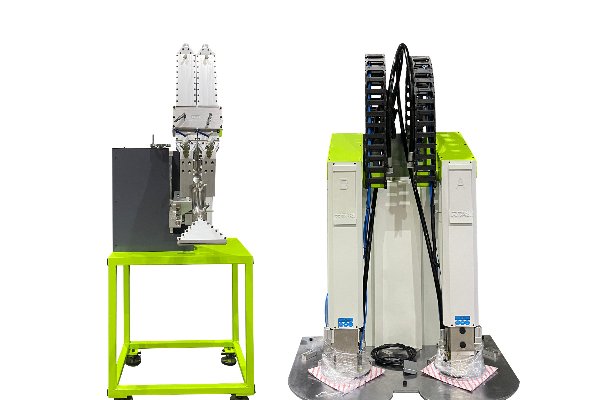
TYM engineers LSR injection molding machines, silicone molds, and turnkey automated production systems for medical, automotive, infant-care, and industrial customers. Before quoting, TYM reviews your part drawing, projected area, cavity layout, and target output to recommend a tonnage and metering configuration matched to your project, rather than a generic catalog spec. The goal is precise, efficient, intelligent production with the lowest sustainable cost per part.
FAQs
Q: How many tons do I need for a small silicone O-ring mold?
A: Most small multi-cavity O-ring tools run on 100-350 ton (1,000-3,500 kN) machines. The exact figure depends on total projected area and cavity pressure. A 16-cavity ring tool around 90 cm2 projected area at 250 bar needs roughly 2,250 kN before adding a safety margin, so a 250-ton machine is a common fit.
Q: Why do LSR machines need less tonnage than plastic machines?
A: Because LSR is injected at much lower cavity pressure (around 150-300 bar) and only fills 90-95% before the material expands during cure. Thermoplastics need high holding pressure and pack-out, which demands far more clamping force for the same projected area.
Q: What safety margin should I add to the calculated clamping force?
A: Add 10-20% above the calculated requirement. This absorbs pressure spikes, mold wear, and minor process drift without forcing you into the next machine class. Larger margins are only justified if you plan to run higher-cavity or larger tools on the same machine later.
Q: Does cavity count change the tonnage I need?
A: Yes. Each added cavity increases total projected area and therefore required clamping force. Doubling cavities roughly doubles projected area, so always size tonnage on the full multi-cavity layout plus cold-runner footprint, not on a single cavity.