
Recent Posts
-
![Meet TYM at K 2025 -The World’ s No.1 Trade Fair for Plastics and Rubber]() Meet TYM at K 2025 -The World’ s No.1 Trade Fair for Plastics and Rubber
Meet TYM at K 2025 -The World’ s No.1 Trade Fair for Plastics and RubberWelcome to the World’s No.1 Trade Fair for Plastics and Rubber -K 2025, taking place from October 8–15, 2025 at Messe Düsseldorf, Germany. As a professional LSR injection molding machine, mold, and robot solution provider, TYM Technology Co., Ltd. is proud to present our latest innovations at Booth 16E77.
09/23/2025
-
![Smart Automation in Silicone Manufacturing: Improving Consistency and Reducing Labor Costs]() Smart Automation in Silicone Manufacturing: Improving Consistency and Reducing Labor Costs
Smart Automation in Silicone Manufacturing: Improving Consistency and Reducing Labor CostsLabor shortages, rising wage costs, and increasing quality expectations are pushing silicone product manufacturers toward greater automation. For liquid silicone rubber (LSR) production specifically, automation is not just about reducing headcount — it directly impacts part consistency, contamination control, and overall production efficiency.
06/12/2026
-
![Shot Size Accuracy in LSR Molding: The Hidden Factor Behind Product Quality]() Shot Size Accuracy in LSR Molding: The Hidden Factor Behind Product Quality
Shot Size Accuracy in LSR Molding: The Hidden Factor Behind Product QualityPrecision is the cornerstone of liquid silicone rubber manufacturing. Yet many manufacturers overlook one critical parameter that determines product consistency: shot size accuracy.
06/10/2026
-
![how to Optimize LSR Injection Molding Machine Performance Through Predictive Maintenance]() how to Optimize LSR Injection Molding Machine Performance Through Predictive Maintenance
how to Optimize LSR Injection Molding Machine Performance Through Predictive MaintenanceIn the competitive landscape of liquid silicone rubber manufacturing, machine downtime can cost manufacturers thousands of dollars per hour.
06/10/2026
-
![How Automated Material Feeding Improves LSR Manufacturing Efficiency]() How Automated Material Feeding Improves LSR Manufacturing Efficiency
How Automated Material Feeding Improves LSR Manufacturing EfficiencyAs labor costs continue to rise and quality requirements become stricter, manufacturers are increasingly adopting automated material feeding systems in liquid silicone rubber production.
06/09/2026
-
![How Does Vacuum Assistance Improve LSR Injection Molding Quality?]() How Does Vacuum Assistance Improve LSR Injection Molding Quality?
How Does Vacuum Assistance Improve LSR Injection Molding Quality?In liquid silicone rubber (LSR) manufacturing, product quality is heavily influenced by how effectively air is removed from the mold cavity. Trapped air can lead to bubbles, incomplete filling, surface defects, and reduced product consistency.
06/08/2026
-
![Why Is Shot Size Accuracy Important in Liquid Silicone Rubber Molding?]() Why Is Shot Size Accuracy Important in Liquid Silicone Rubber Molding?
Why Is Shot Size Accuracy Important in Liquid Silicone Rubber Molding?Precision is one of the key advantages of liquid silicone rubber molding. However, achieving consistent product quality depends heavily on accurate shot size control.
06/08/2026
-
![How Clamp Force Selection Affects LSR Injection Molding Performance]() How Clamp Force Selection Affects LSR Injection Molding Performance
How Clamp Force Selection Affects LSR Injection Molding PerformanceClamping force is one of the most fundamental parameters in liquid silicone rubber injection molding. While many manufacturers focus heavily on injection pressure, metering accuracy, and mold design, the selection of proper clamp force directly influences product quality, mold lifespan, process stability, and overall production efficiency.
06/03/2026
-
![How Closed-Loop Injection Control Improves LSR Molding Stability]() How Closed-Loop Injection Control Improves LSR Molding Stability
How Closed-Loop Injection Control Improves LSR Molding StabilityAdvanced manufacturing systems are now integrating digital monitoring, servo-driven motion control, and intelligent process optimization to reduce variability during molding cycles.
05/29/2026
-
![Energy Consumption Optimization in Modern LSR Injection Molding Machines]() Energy Consumption Optimization in Modern LSR Injection Molding Machines
Energy Consumption Optimization in Modern LSR Injection Molding MachinesAs manufacturing industries move toward sustainable and cost-efficient production models, energy optimization has become an increasingly important factor in liquid silicone rubber injection molding.
05/28/2026

Smart Automation in Silicone Manufacturing: Improving Consistency and Reducing Labor Costs
Labor shortages, rising wage costs, and increasing quality expectations are pushing silicone product manufacturers toward greater automation. For liquid silicone rubber (LSR) production specifically, automation is not just about reducing headcount — it directly impacts part consistency, contamination control, and overall production efficiency.
Where Automation Makes the Biggest Impact
In a typical LSR production cell, automation can be applied at several stages: robotic removal of finished parts from the mold, automated trimming or deflashing of runners and excess material, vision-based inspection for defects such as flash or short shots, and automated packaging or downstream assembly such as combining a silicone component with a rigid housing.
Consistency Through Repeatability
Manual part handling introduces variability — in cycle time, in how parts are placed during cooling, and in the risk of surface contamination from handling. Robotic systems perform these tasks with the same motion and timing every cycle, which helps maintain consistent part quality across long production runs and across shifts.
Contamination Control for Sensitive Applications
For medical and infant-care products, minimizing human contact with parts after molding is a meaningful advantage. Automated part removal and handling systems reduce the number of touchpoints between a finished part and the surrounding environment, supporting cleanroom protocols and reducing the risk of particulate or biological contamination.
Vision Inspection and Quality Data
Camera-based inspection systems integrated into the molding cell can automatically check for common LSR defects — flash, incomplete fills, surface blemishes, or dimensional deviations — and flag or reject non-conforming parts in real time. Over time, this inspection data can also be used to monitor process trends and identify drift before it results in scrap.
Integration with Existing Production Lines
One of the practical challenges of adopting automation is integrating new robotic cells with existing molding machines and mold designs. Automation systems designed with awareness of the mold's ejection sequence, part geometry, and cycle time can be integrated more smoothly, avoiding costly modifications to existing tooling.
A Practical Path Forward
Manufacturers don't need to automate an entire facility overnight. Starting with the highest-impact stations — typically part removal and inspection — can deliver measurable improvements in consistency and labor efficiency while building internal experience with automated systems. From there, additional stages such as trimming, assembly, and packaging can be added incrementally.
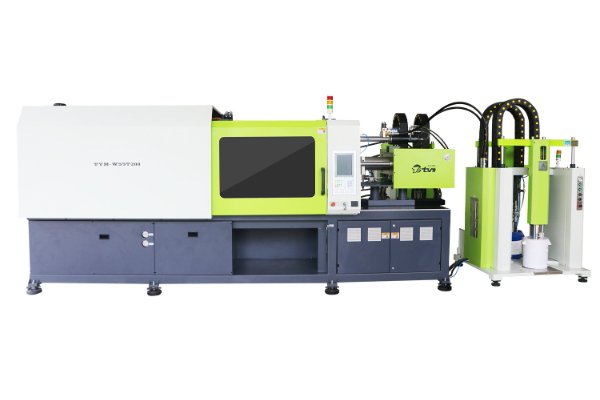
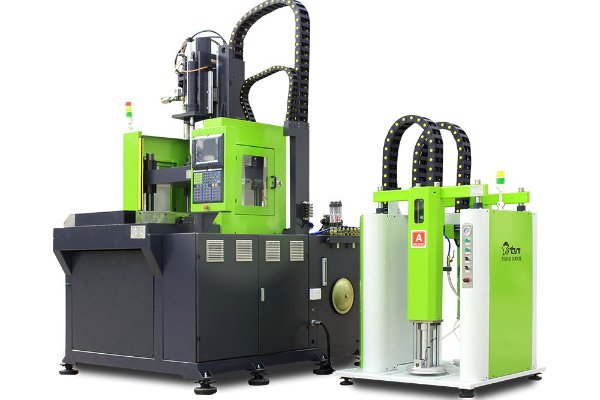
TYM's automation systems are designed to work seamlessly with our LSR injection molding machines and mold designs, providing manufacturers with a clear, scalable path toward smarter, more consistent silicone production.