
Recent Posts
-
![Meet TYM at K 2025 -The World’ s No.1 Trade Fair for Plastics and Rubber]() Meet TYM at K 2025 -The World’ s No.1 Trade Fair for Plastics and Rubber
Meet TYM at K 2025 -The World’ s No.1 Trade Fair for Plastics and RubberWelcome to the World’s No.1 Trade Fair for Plastics and Rubber -K 2025, taking place from October 8–15, 2025 at Messe Düsseldorf, Germany. As a professional LSR injection molding machine, mold, and robot solution provider, TYM Technology Co., Ltd. is proud to present our latest innovations at Booth 16E77.
09/23/2025
-
![Self-Bonding LSR: How Self-Adhesive Liquid Silicone Simplifies Multi-Material Overmolding]() Self-Bonding LSR: How Self-Adhesive Liquid Silicone Simplifies Multi-Material Overmolding
Self-Bonding LSR: How Self-Adhesive Liquid Silicone Simplifies Multi-Material OvermoldingIf you manufacture multi-material silicone parts, the bonding step is often the hidden bottleneck. Traditional liquid silicone rubber (LSR) overmolding relies on a separately applied primer to make the silicone stick to a plastic or metal substrate.
06/18/2026
-
![Smart Automation in Silicone Manufacturing: Improving Consistency and Reducing Labor Costs]() Smart Automation in Silicone Manufacturing: Improving Consistency and Reducing Labor Costs
Smart Automation in Silicone Manufacturing: Improving Consistency and Reducing Labor CostsLabor shortages, rising wage costs, and increasing quality expectations are pushing silicone product manufacturers toward greater automation. For liquid silicone rubber (LSR) production specifically, automation is not just about reducing headcount — it directly impacts part consistency, contamination control, and overall production efficiency.
06/12/2026
-
![Shot Size Accuracy in LSR Molding: The Hidden Factor Behind Product Quality]() Shot Size Accuracy in LSR Molding: The Hidden Factor Behind Product Quality
Shot Size Accuracy in LSR Molding: The Hidden Factor Behind Product QualityPrecision is the cornerstone of liquid silicone rubber manufacturing. Yet many manufacturers overlook one critical parameter that determines product consistency: shot size accuracy.
06/10/2026
-
![how to Optimize LSR Injection Molding Machine Performance Through Predictive Maintenance]() how to Optimize LSR Injection Molding Machine Performance Through Predictive Maintenance
how to Optimize LSR Injection Molding Machine Performance Through Predictive MaintenanceIn the competitive landscape of liquid silicone rubber manufacturing, machine downtime can cost manufacturers thousands of dollars per hour.
06/10/2026
-
![How Automated Material Feeding Improves LSR Manufacturing Efficiency]() How Automated Material Feeding Improves LSR Manufacturing Efficiency
How Automated Material Feeding Improves LSR Manufacturing EfficiencyAs labor costs continue to rise and quality requirements become stricter, manufacturers are increasingly adopting automated material feeding systems in liquid silicone rubber production.
06/09/2026
-
![How Does Vacuum Assistance Improve LSR Injection Molding Quality?]() How Does Vacuum Assistance Improve LSR Injection Molding Quality?
How Does Vacuum Assistance Improve LSR Injection Molding Quality?In liquid silicone rubber (LSR) manufacturing, product quality is heavily influenced by how effectively air is removed from the mold cavity. Trapped air can lead to bubbles, incomplete filling, surface defects, and reduced product consistency.
06/08/2026
-
![Why Is Shot Size Accuracy Important in Liquid Silicone Rubber Molding?]() Why Is Shot Size Accuracy Important in Liquid Silicone Rubber Molding?
Why Is Shot Size Accuracy Important in Liquid Silicone Rubber Molding?Precision is one of the key advantages of liquid silicone rubber molding. However, achieving consistent product quality depends heavily on accurate shot size control.
06/08/2026
-
![How Clamp Force Selection Affects LSR Injection Molding Performance]() How Clamp Force Selection Affects LSR Injection Molding Performance
How Clamp Force Selection Affects LSR Injection Molding PerformanceClamping force is one of the most fundamental parameters in liquid silicone rubber injection molding. While many manufacturers focus heavily on injection pressure, metering accuracy, and mold design, the selection of proper clamp force directly influences product quality, mold lifespan, process stability, and overall production efficiency.
06/03/2026
-
![How Closed-Loop Injection Control Improves LSR Molding Stability]() How Closed-Loop Injection Control Improves LSR Molding Stability
How Closed-Loop Injection Control Improves LSR Molding StabilityAdvanced manufacturing systems are now integrating digital monitoring, servo-driven motion control, and intelligent process optimization to reduce variability during molding cycles.
05/29/2026

LSR Injection Molding Machine: How to Choose the Right Tonnage
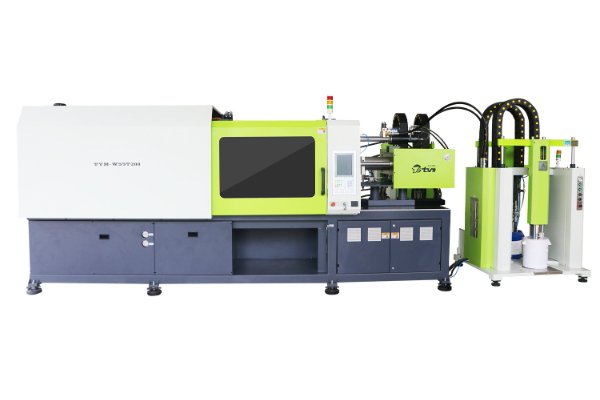
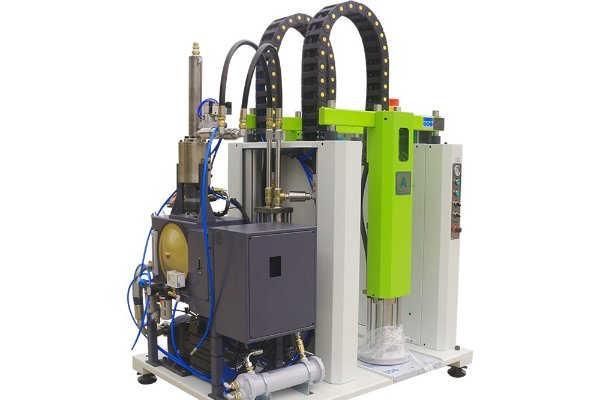
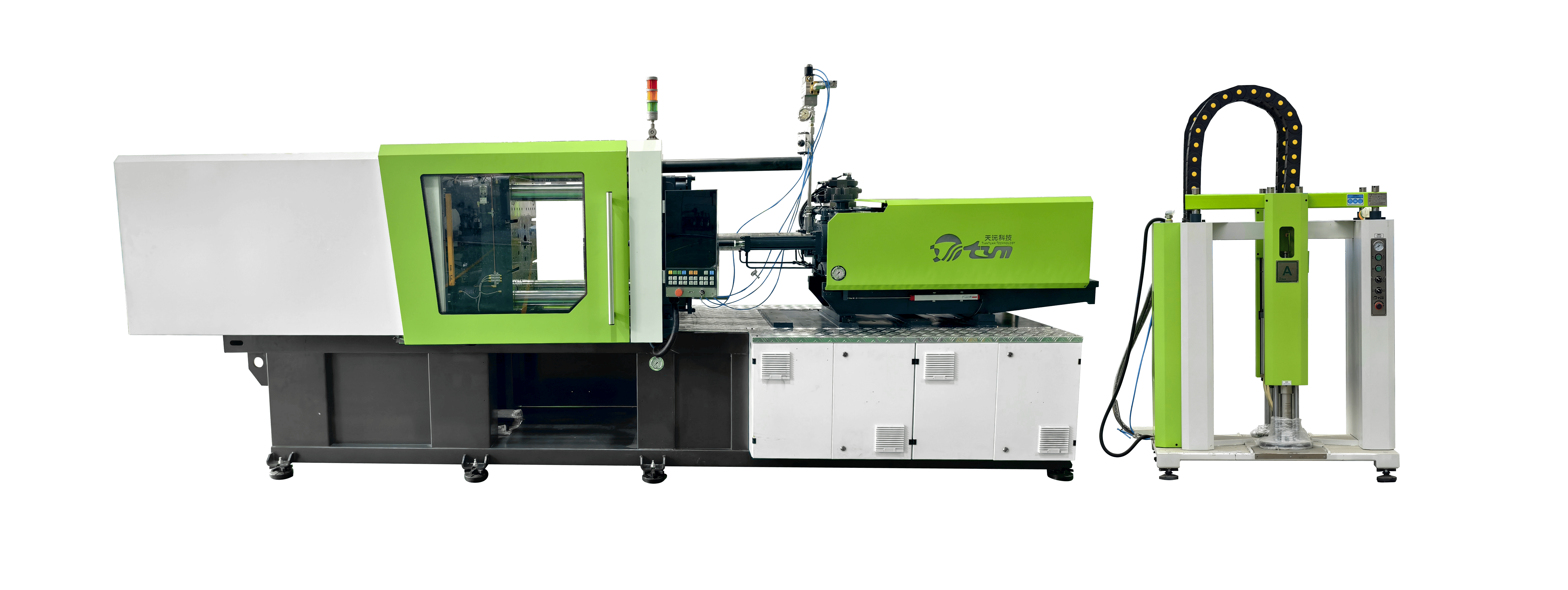
Selecting the right LSR injection molding machine tonnage is essential for stable production and consistent product quality. Many manufacturers focus only on part size, but tonnage selection actually depends on multiple factors, including mold design, cavity number, and material behavior.
Liquid silicone rubber (LSR) is a low-viscosity material that flows easily but is highly sensitive to pressure imbalance. Insufficient clamping force leads to flash and defects, while excessive tonnage increases cost and energy consumption.
What Is Injection Molding Machine Tonnage
Definition of Clamping Force
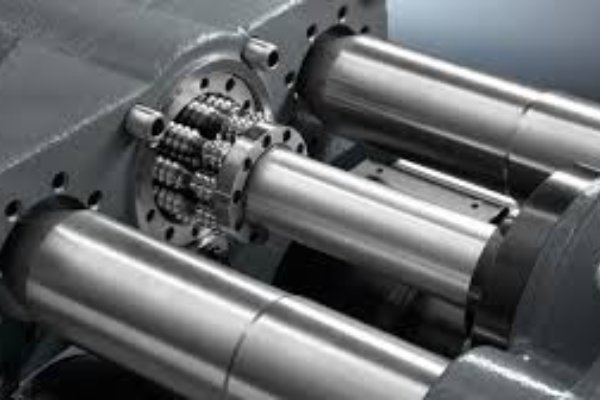
Injection molding machine tonnage refers to the clamping force used to keep the mold closed during injection. This force prevents the mold from opening under internal pressure. The general formula used in engineering is:Clamping Force = Projected Area × Material Factor × Safety Margin
If the tonnage is too low, molten material escapes and creates flash. If too high, it can damage the mold and reduce efficiency.
Why Tonnage Matters in LSR Injection
LSR requires more precise clamping control than thermoplastics due to its high flowability. Even small pressure variations can affect part quality, especially in thin-wall or multi-cavity designs.
Key Factors That Determine LSR Machine Tonnage
Projected Area
Projected area is the most important factor in tonnage calculation. It represents the surface area of the part from the mold opening direction. A larger projected area increases the force required to keep the mold closed.
Number of Cavities
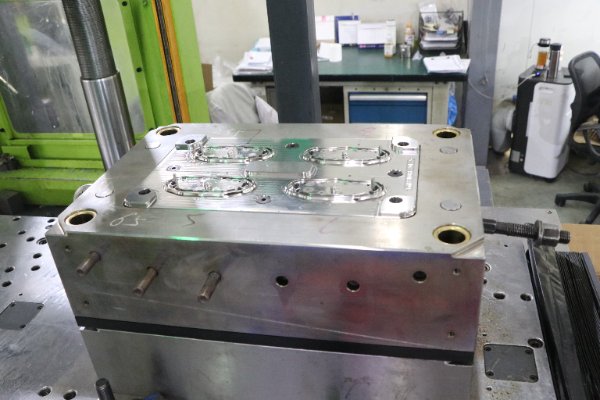
Multi-cavity molds significantly increase total projected area and pressure load. As cavity count increases, tonnage requirements rise accordingly, making balance and machine stability more critical.
Material Behavior (LSR Characteristics)
LSR has lower viscosity than most plastics, which allows faster filling but also increases the risk of flashing. Materials with higher flowability require more precise clamping control rather than simply higher tonnage
Injection Pressure and Process Conditions
Higher injection pressure or faster filling speeds increase the force acting on the mold, which raises tonnage requirements
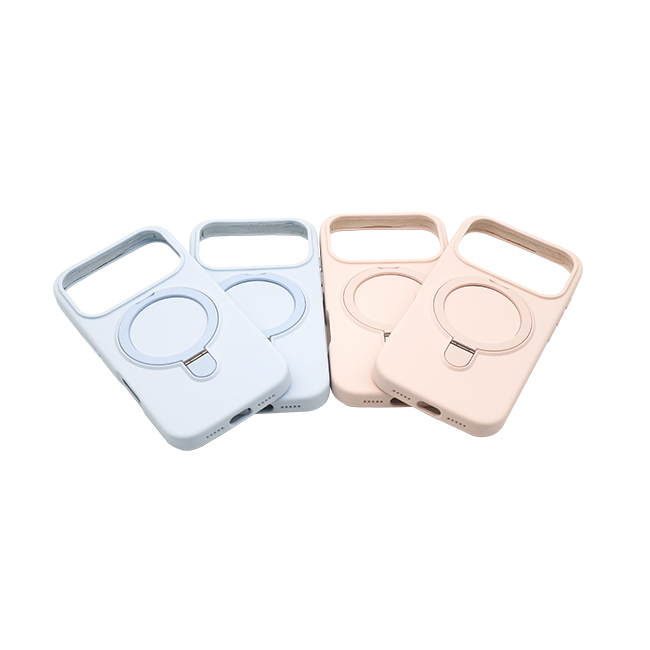
Case Study: iPhone 17 Pro silicone phone case
Project Background
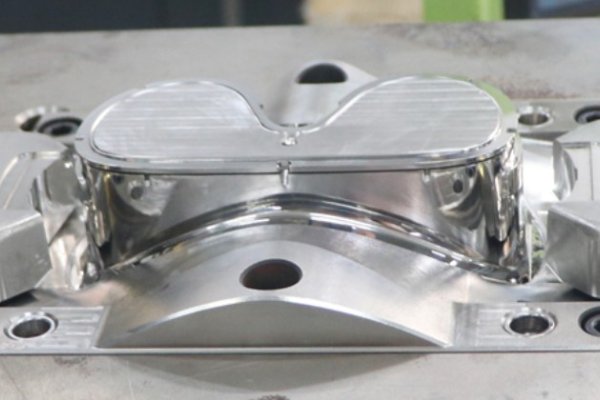
iPhone 17 Pro silicone phone case project required high flexibility, smooth surface finish, and consistent wall thickness. The product had a large projected area and thin-wall structure, making it highly sensitive to clamping force.
Production Challenges
During initial production, the following issues occurred:
· Flash along the parting line
· Uneven filling
· Process instability
These problems were caused by insufficient clamping force combined with multi-cavity pressure imbalance.
Tonnage Selection Optimization
The engineering team evaluated:
· Total projected area of the phone case
· Multi-cavity configuration
· LSR material flow characteristics
Because thin-wall LSR parts require higher injection pressure, additional clamping force and precision control were necessary.
Final Results
After optimizing tonnage and system parameters:
· Flash was eliminated
· Filling became uniform
· Production stability improved significantly
This case demonstrates that correct tonnage selection must consider the entire system, not just part size.
Common Mistakes in Tonnage Selection
Only Considering Product Size
Ignoring cavity number, mold structure, and material leads to incorrect machine selection.
Choosing Excessive Tonnage
Oversized machines increase cost and energy consumption without improving product quality. Excess force may also damage mold components.
Ignoring LSR Behavior
Using thermoplastic standards for LSR projects often results in instability and defects due to different flow characteristics.
How to Choose the Right Tonnage
Accurate tonnage selection requires evaluating projected area, cavity layout, material properties, and injection pressure. A safety factor is typically added to ensure process stability.
Tonnage must match the entire production system, including mold design, machine capability, and process parameters. A balanced system improves yield, reduces defects, and lowers operating costs.
FAQs
Q:What happens if tonnage is too low?
A:The mold may open during injection, causing flash, short shots, and dimensional defects.
Q:Is higher tonnage always better?
A:No. Excessive tonnage increases cost and may damage the mold without improving quality.
Q:How is tonnage calculated?
A:Tonnage is calculated based on projected area, material factor, and injection pressure, usually with a safety margin included.
Q:Why is LSR tonnage selection different?
A:LSR flows more easily than thermoplastics, making it more sensitive to pressure imbalance and requiring precise clamping control.
Conclusion
Choosing the right LSR injection molding machine tonnage is critical for achieving high-quality and stable production. The correct approach is not simply selecting a larger machine, but optimizing the balance between projected area, material behavior, mold design, and process conditions.