
Recent Posts
-
![Meet TYM at K 2025 -The World’ s No.1 Trade Fair for Plastics and Rubber]() Meet TYM at K 2025 -The World’ s No.1 Trade Fair for Plastics and Rubber
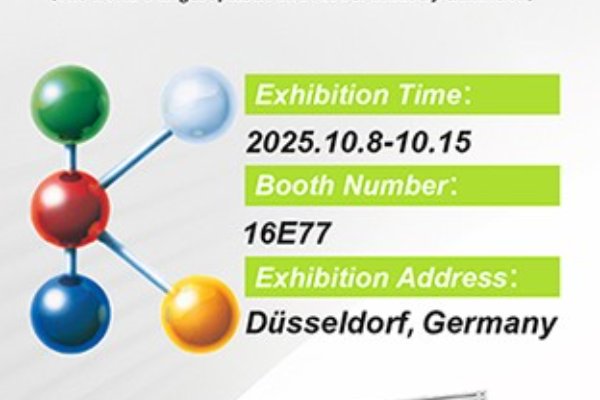
Meet TYM at K 2025 -The World’ s No.1 Trade Fair for Plastics and RubberWelcome to the World’s No.1 Trade Fair for Plastics and Rubber -K 2025, taking place from October 8–15, 2025 at Messe Düsseldorf, Germany. As a professional LSR injection molding machine, mold, and robot solution provider, TYM Technology Co., Ltd. is proud to present our latest innovations at Booth 16E77.
09/23/2025
-
![Self-Bonding LSR: How Self-Adhesive Liquid Silicone Simplifies Multi-Material Overmolding]() Self-Bonding LSR: How Self-Adhesive Liquid Silicone Simplifies Multi-Material Overmolding
Self-Bonding LSR: How Self-Adhesive Liquid Silicone Simplifies Multi-Material OvermoldingIf you manufacture multi-material silicone parts, the bonding step is often the hidden bottleneck. Traditional liquid silicone rubber (LSR) overmolding relies on a separately applied primer to make the silicone stick to a plastic or metal substrate.
06/18/2026
-
![Smart Automation in Silicone Manufacturing: Improving Consistency and Reducing Labor Costs]() Smart Automation in Silicone Manufacturing: Improving Consistency and Reducing Labor Costs
Smart Automation in Silicone Manufacturing: Improving Consistency and Reducing Labor CostsLabor shortages, rising wage costs, and increasing quality expectations are pushing silicone product manufacturers toward greater automation. For liquid silicone rubber (LSR) production specifically, automation is not just about reducing headcount — it directly impacts part consistency, contamination control, and overall production efficiency.
06/12/2026
-
![Shot Size Accuracy in LSR Molding: The Hidden Factor Behind Product Quality]() Shot Size Accuracy in LSR Molding: The Hidden Factor Behind Product Quality
Shot Size Accuracy in LSR Molding: The Hidden Factor Behind Product QualityPrecision is the cornerstone of liquid silicone rubber manufacturing. Yet many manufacturers overlook one critical parameter that determines product consistency: shot size accuracy.
06/10/2026
-
![how to Optimize LSR Injection Molding Machine Performance Through Predictive Maintenance]() how to Optimize LSR Injection Molding Machine Performance Through Predictive Maintenance
how to Optimize LSR Injection Molding Machine Performance Through Predictive MaintenanceIn the competitive landscape of liquid silicone rubber manufacturing, machine downtime can cost manufacturers thousands of dollars per hour.
06/10/2026
-
![How Automated Material Feeding Improves LSR Manufacturing Efficiency]() How Automated Material Feeding Improves LSR Manufacturing Efficiency
How Automated Material Feeding Improves LSR Manufacturing EfficiencyAs labor costs continue to rise and quality requirements become stricter, manufacturers are increasingly adopting automated material feeding systems in liquid silicone rubber production.
06/09/2026
-
![How Does Vacuum Assistance Improve LSR Injection Molding Quality?]() How Does Vacuum Assistance Improve LSR Injection Molding Quality?
How Does Vacuum Assistance Improve LSR Injection Molding Quality?In liquid silicone rubber (LSR) manufacturing, product quality is heavily influenced by how effectively air is removed from the mold cavity. Trapped air can lead to bubbles, incomplete filling, surface defects, and reduced product consistency.
06/08/2026
-
![Why Is Shot Size Accuracy Important in Liquid Silicone Rubber Molding?]() Why Is Shot Size Accuracy Important in Liquid Silicone Rubber Molding?
Why Is Shot Size Accuracy Important in Liquid Silicone Rubber Molding?Precision is one of the key advantages of liquid silicone rubber molding. However, achieving consistent product quality depends heavily on accurate shot size control.
06/08/2026
-
![How Clamp Force Selection Affects LSR Injection Molding Performance]() How Clamp Force Selection Affects LSR Injection Molding Performance
How Clamp Force Selection Affects LSR Injection Molding PerformanceClamping force is one of the most fundamental parameters in liquid silicone rubber injection molding. While many manufacturers focus heavily on injection pressure, metering accuracy, and mold design, the selection of proper clamp force directly influences product quality, mold lifespan, process stability, and overall production efficiency.
06/03/2026
-
![How Closed-Loop Injection Control Improves LSR Molding Stability]() How Closed-Loop Injection Control Improves LSR Molding Stability
How Closed-Loop Injection Control Improves LSR Molding StabilityAdvanced manufacturing systems are now integrating digital monitoring, servo-driven motion control, and intelligent process optimization to reduce variability during molding cycles.
05/29/2026
Self-Bonding LSR: How Self-Adhesive Liquid Silicone Simplifies Multi-Material Overmolding
If you manufacture multi-material silicone parts, the bonding step is often the hidden bottleneck. Traditional liquid silicone rubber (LSR) overmolding relies on a separately applied primer to make the silicone stick to a plastic or metal substrate. That primer adds a coating station, a curing or flash-off step, manual handling, and a recurring source of bond failures and rejects. Self-bonding LSR removes that step entirely.
What Is Self-Bonding (Self-Adhesive) LSR?
Self-bonding LSR is a two-component, platinum-cured liquid silicone in which the adhesion promoter is built directly into the silicone formulation rather than applied to the substrate as a separate primer. When the silicone is injected onto a prepared thermoplastic or metal surface and cured under heat, the integrated adhesion promoter reacts at the interface and forms a permanent chemical bond during the same cure cycle that crosslinks the part.
The practical result is a true one-step, primerless overmolding process. Material suppliers such as Wacker, Momentive, and Dow offer self-adhesive grades across a broad hardness range, commonly from roughly 30 to 70 Shore A, so engineers can match feel and function without giving up bond strength. Because the bond forms in-mold, the finished assembly behaves as a single integrated component rather than two parts held together.
Why Primerless Bonding Matters for B2B Producers
Every priming operation a factory removes is a station that no longer consumes labor, floor space, energy, and consumables, and no longer introduces variability. Liquid primers require controlled application thickness, flash-off time, and often ventilation and solvent handling. Inconsistent priming is one of the most common root causes of delamination in overmolded silicone parts.
Self-bonding LSR converts that multi-step, operator-dependent sequence into a single automated shot. The benefits compound across a production run: fewer rejects from weak or missed bonds, faster overall cycle time because there is no off-line priming queue, a cleaner workspace with reduced solvent exposure, and simpler validation because there is one fewer process variable to document and control. For medical, automotive, and consumer-electronics buyers who demand traceable, repeatable quality, that simplification is a meaningful advantage.
Compatible Substrates and Typical Applications
Self-adhesive LSR grades are formulated to bond directly to engineering thermoplastics including polyamide (PA/nylon), polycarbonate (PC), PBT, PET, polysulfone, and selected co-polyesters, as well as metals such as stainless steel and aluminum. Bond performance depends on the substrate's heat resistance and surface condition, so the rigid component must tolerate the silicone cure temperature without deforming.
Typical applications span the industries TYM serves every day. In medical devices, self-bonding LSR seals valves, housings, and connector bodies where a clean, particle-free bond is essential. In automotive, it overmolds sensor housings, connector seals, and grommets that must survive heat, vibration, and fluids. In consumer electronics, it creates integrated waterproof seals and soft-touch surfaces on rigid plastic frames. In baby and personal-care products, it bonds skin-safe silicone to durable plastic structures in a single hygienic step.
How Equipment Turns the Material Advantage Into Real Output
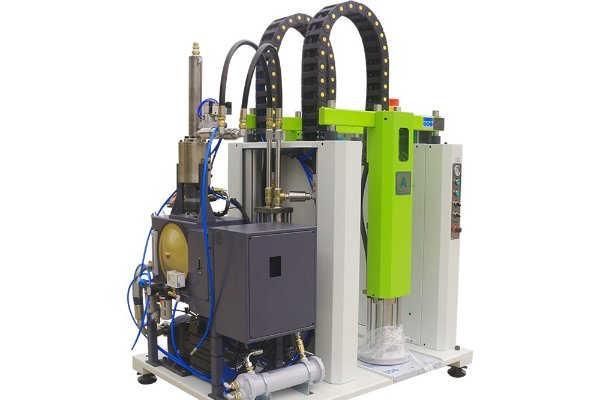
Self-bonding chemistry only delivers its full value when the molding process is precise and repeatable. The bond forms within a narrow window of temperature, dwell, and mixing accuracy, so the injection molding machine must hold those parameters shot after shot. A high-accuracy metering and mixing unit maintaining a stable 1:1 ratio of the two LSR components ensures the adhesion promoter is evenly distributed and fully activated at the interface.
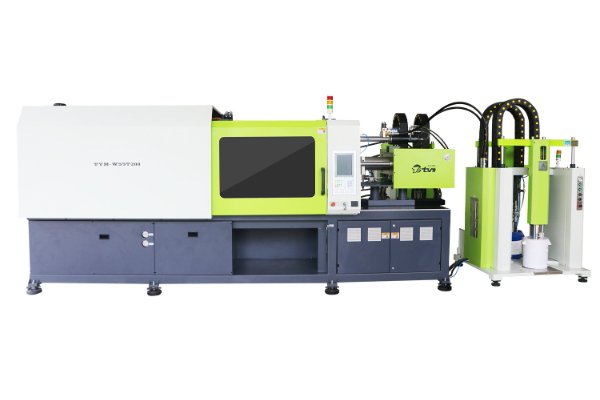
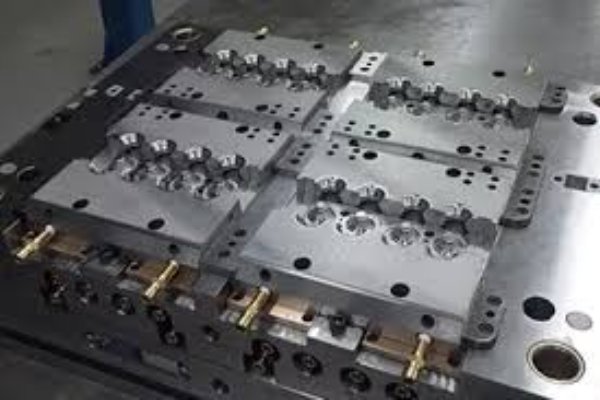
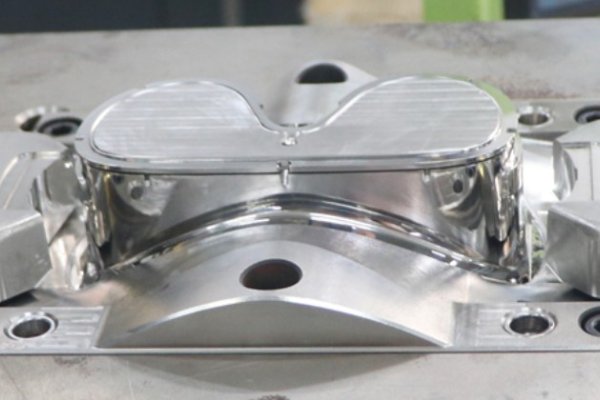
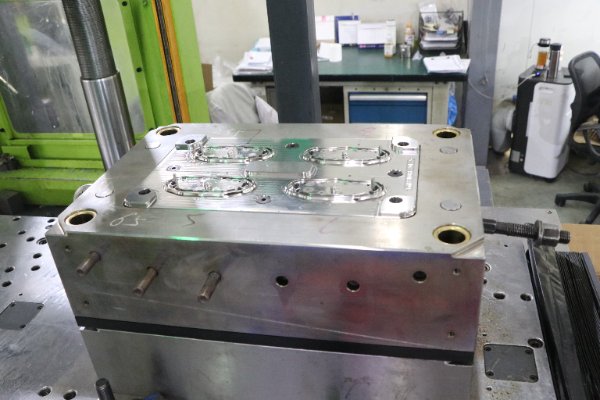
Tight mold temperature control keeps the substrate and silicone within the bonding window across every cavity, while servo-driven injection delivers consistent fill speed and pressure so thin sealing geometries bond uniformly. For two-shot production, a rotary or transfer system positions the rigid pre-molded substrate accurately for the silicone shot. TYM configures its LSR injection molding machines and tooling specifically for these multi-material requirements, pairing precise metering, thermal management, and automation so that the primerless bond is reliable at production volume.
Design and Process Tips for Strong Primerless Bonds
A few engineering practices help self-bonding LSR perform at its best. Specify a substrate with sufficient heat resistance for the silicone cure, and keep substrate surfaces clean and free of mold release or contamination before overmolding. Design adequate contact area and mechanical interlocks where possible so the chemical bond is reinforced by geometry, particularly on parts that will see peel or shear loads.
Validate the bond with pull, peel, and environmental aging tests that reflect the real service conditions, and confirm cure temperature and dwell time with mold-flow and cavity data rather than assumptions. Because self-bonding grades have a defined working life once mixed, a closed material-handling and metering system protects the chemistry from premature reaction and contamination. Partnering with a supplier who controls both the equipment and the process makes this validation faster and more repeatable.
Conclusion
Self-bonding LSR is one of the clearest examples of a material innovation that pays off mainly through process simplification. By moving the adhesion promoter into the silicone itself, manufacturers eliminate the priming station, reduce defects, shorten cycle time, and produce integrated multi-material parts in a single clean shot.
At TYM (Guangzhou Tianyuan Intelligent Manufacturing Technology Co., Ltd.), we specialize in LSR injection molding machines, precision molds, and complete automated production systems engineered for demanding multi-material and overmolding applications. If you are evaluating self-bonding LSR for medical, automotive, electronics, or baby-care components, our engineering team can help you match material, mold, and machine for reliable primerless production.