
Recent Posts
-
![Meet TYM at K 2025 -The World’ s No.1 Trade Fair for Plastics and Rubber]() Meet TYM at K 2025 -The World’ s No.1 Trade Fair for Plastics and Rubber
Meet TYM at K 2025 -The World’ s No.1 Trade Fair for Plastics and RubberWelcome to the World’s No.1 Trade Fair for Plastics and Rubber -K 2025, taking place from October 8–15, 2025 at Messe Düsseldorf, Germany. As a professional LSR injection molding machine, mold, and robot solution provider, TYM Technology Co., Ltd. is proud to present our latest innovations at Booth 16E77.
09/23/2025
-
![How Automated Material Feeding Improves LSR Manufacturing Efficiency]() How Automated Material Feeding Improves LSR Manufacturing Efficiency
How Automated Material Feeding Improves LSR Manufacturing EfficiencyAs labor costs continue to rise and quality requirements become stricter, manufacturers are increasingly adopting automated material feeding systems in liquid silicone rubber production.
06/09/2026
-
![How Does Vacuum Assistance Improve LSR Injection Molding Quality?]() How Does Vacuum Assistance Improve LSR Injection Molding Quality?
How Does Vacuum Assistance Improve LSR Injection Molding Quality?In liquid silicone rubber (LSR) manufacturing, product quality is heavily influenced by how effectively air is removed from the mold cavity. Trapped air can lead to bubbles, incomplete filling, surface defects, and reduced product consistency.
06/08/2026
-
![Why Is Shot Size Accuracy Important in Liquid Silicone Rubber Molding?]() Why Is Shot Size Accuracy Important in Liquid Silicone Rubber Molding?
Why Is Shot Size Accuracy Important in Liquid Silicone Rubber Molding?Precision is one of the key advantages of liquid silicone rubber molding. However, achieving consistent product quality depends heavily on accurate shot size control.
06/08/2026
-
![How Clamp Force Selection Affects LSR Injection Molding Performance]() How Clamp Force Selection Affects LSR Injection Molding Performance
How Clamp Force Selection Affects LSR Injection Molding PerformanceClamping force is one of the most fundamental parameters in liquid silicone rubber injection molding. While many manufacturers focus heavily on injection pressure, metering accuracy, and mold design, the selection of proper clamp force directly influences product quality, mold lifespan, process stability, and overall production efficiency.
06/03/2026
-
![How Closed-Loop Injection Control Improves LSR Molding Stability]() How Closed-Loop Injection Control Improves LSR Molding Stability
How Closed-Loop Injection Control Improves LSR Molding StabilityAdvanced manufacturing systems are now integrating digital monitoring, servo-driven motion control, and intelligent process optimization to reduce variability during molding cycles.
05/29/2026
-
![Energy Consumption Optimization in Modern LSR Injection Molding Machines]() Energy Consumption Optimization in Modern LSR Injection Molding Machines
Energy Consumption Optimization in Modern LSR Injection Molding MachinesAs manufacturing industries move toward sustainable and cost-efficient production models, energy optimization has become an increasingly important factor in liquid silicone rubber injection molding.
05/28/2026
-
![LSR Injection Machine Guide: How Proper Maintenance Extends Injection Machine Lifespan]() LSR Injection Machine Guide: How Proper Maintenance Extends Injection Machine Lifespan
LSR Injection Machine Guide: How Proper Maintenance Extends Injection Machine LifespanLiquid silicone rubber injection molding machines operate under highly specialized production conditions that require long-term precision, thermal stability, and continuous mechanical reliability.
05/19/2026
-
![What Are the Advantages of Integrated Horizontal Injection Molding Machines?]() What Are the Advantages of Integrated Horizontal Injection Molding Machines?
What Are the Advantages of Integrated Horizontal Injection Molding Machines?Integrated horizontal injection molding machines have become increasingly important in modern liquid silicone rubber manufacturing due to their ability to combine automation, precision, and production efficiency into a single system architecture.
05/18/2026
-
![High-Precision Liquid Silicone Rubber Injection Molding: How to Achieve Micron-Level Tolerance Control]() High-Precision Liquid Silicone Rubber Injection Molding: How to Achieve Micron-Level Tolerance Control
High-Precision Liquid Silicone Rubber Injection Molding: How to Achieve Micron-Level Tolerance ControlAs medical devices, wearable electronics, automotive sealing systems, and micro silicone components continue evolving toward miniaturization and precision manufacturing, micron-level dimensional control has become increasingly important in Liquid Silicone Rubber injection molding.
05/15/2026

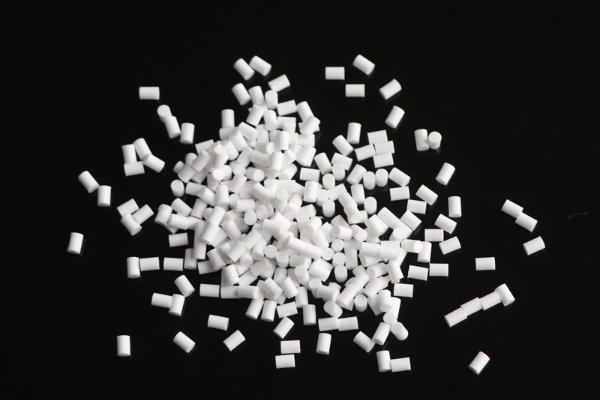
Material Deep Dive: Performance and Cost Analysis of LSR vs. TPE-S for Cup Lid Seals
Choosing the right material for a cup lid seal involves weighing performance against cost. This article provides a comparative analysis of Liquid Silicone Rubber (LSR) and Styrenic Block Copolymer Thermoplastic Elastomers (TPE-S) for this application.
Selecting between LSR and TPE-S for a cup lid seal is a common dilemma for product designers. Both materials offer elastomeric properties, but they differ significantly in performance characteristics and cost structure, making the choice application-dependent.
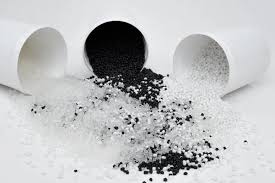
Liquid Silicone Rubber (LSR) excels in durability and temperature resistance. It maintains its properties over a wide temperature range (-40°C to +200°C) and has excellent resistance to aging, UV light, and chemicals. This makes it ideal for applications involving hot beverages or repeated sterilization. LSR also offers superior biocompatibility and is often preferred for food contact applications. However, it typically has a higher raw material cost and requires a more energy-intensive, high-temperature molding process.
Thermoplastic Elastomer-Styrenic (TPE-S) is generally less expensive and easier to process, as it can be molded on standard thermoplastic equipment at lower temperatures. It offers good flexibility and is recyclable. However, it has lower heat resistance, may absorb flavors or odors over time, and its mechanical properties can degrade with exposure to certain chemicals or prolonged use. For cost-sensitive applications where extreme durability or high heat is not a primary concern, TPE-S can be a viable option. The choice ultimately depends on the specific performance requirements and cost targets of the product.