
Recent Posts
-
![Meet TYM at K 2025 -The World’ s No.1 Trade Fair for Plastics and Rubber]() Meet TYM at K 2025 -The World’ s No.1 Trade Fair for Plastics and Rubber
Meet TYM at K 2025 -The World’ s No.1 Trade Fair for Plastics and RubberWelcome to the World’s No.1 Trade Fair for Plastics and Rubber -K 2025, taking place from October 8–15, 2025 at Messe Düsseldorf, Germany. As a professional LSR injection molding machine, mold, and robot solution provider, TYM Technology Co., Ltd. is proud to present our latest innovations at Booth 16E77.
09/23/2025
-
![Vacuum-Assisted Injection for Liquid Silicone: What It Actually Fixes, and Which Products Justify the Added Cost]() Vacuum-Assisted Injection for Liquid Silicone: What It Actually Fixes, and Which Products Justify the Added Cost
Vacuum-Assisted Injection for Liquid Silicone: What It Actually Fixes, and Which Products Justify the Added CostVacuum-assisted injection reduces micro-bubbles in liquid silicone parts, but it's not worth the added cost for every product. Here's how to decide.
08/19/2026
-
![When Mold Temperature Controller and Injection Machine Fall Out of Sync: Why Parts Still Show Localized Under-Cure Even When]() When Mold Temperature Controller and Injection Machine Fall Out of Sync: Why Parts Still Show Localized Under-Cure Even When "All Parameters Are Correct"
When Mold Temperature Controller and Injection Machine Fall Out of Sync: Why Parts Still Show Localized Under-Cure Even When "All Parameters Are Correct""All parameters correct" but still getting localized under-cure? Mold temperature controller and injection machine timing mismatch is a common hidden cause.
08/18/2026
-
![How Much A/B Mixing Ratio Error Causes Under-Cure in Liquid Silicone — and How Equipment-Level Monitoring Can Catch It]() How Much A/B Mixing Ratio Error Causes Under-Cure in Liquid Silicone — and How Equipment-Level Monitoring Can Catch It
How Much A/B Mixing Ratio Error Causes Under-Cure in Liquid Silicone — and How Equipment-Level Monitoring Can Catch ItSmall A/B mixing ratio errors in liquid silicone can cause under-cured parts without visible warning. Learn the tolerance thresholds and equipment monitoring methods.
08/15/2026
-
![Injection Pressure / Servo Pressure Sensor Drift: How Often Should It Be Calibrated?]() Injection Pressure / Servo Pressure Sensor Drift: How Often Should It Be Calibrated?
Injection Pressure / Servo Pressure Sensor Drift: How Often Should It Be Calibrated?Injection pressure and servo sensor drift can silently degrade LSR part quality. Learn the warning signs and a practical calibration schedule.
08/13/2026
-
![How to Verify Whether a Supplier's]() How to Verify Whether a Supplier's "Parts Per Hour" Claim Includes Color or Mold Changeover Time
How to Verify Whether a Supplier's "Parts Per Hour" Claim Includes Color or Mold Changeover TimeWhen comparing liquid silicone rubber (LSR) injection molding machines, almost every supplier quote includes a headline number: parts per hour, or cycles per hour. It looks like the easiest number to compare — until you realize it rarely means the same thing from one supplier to the next.
08/10/2026
-
Common Failure Modes in In-Mold Assembly (IMA) on Double-Color and Double-Material LSR Machines
In-mold assembly — molding a silicone component directly onto or around a second material within a single cycle — is one of the strongest arguments for double-color and double-material LSR machines. It eliminates a secondary bonding or assembly step, reduces labor, and improves consistency versus post-mold assembly. On paper, it sounds like a straightforward efficiency gain.
08/07/2026
-
Cold Runner Clogging in LSR Injection Molding: A Practical Troubleshooting Guide
Cold runner systems are one of the main reasons manufacturers choose liquid silicone rubber (LSR) injection molding over conventional runner designs — no gate vestige, no flash to trim, and lower material waste. But when a cold runner starts to clog, that advantage disappears fast: production stops, scrap rates climb, and every hour of downtime costs real money.
08/04/2026
-
![Pure Electric Servo Feeding System vs. Traditional Pneumatic Feeding: Which One Actually Saves You Money?]() Pure Electric Servo Feeding System vs. Traditional Pneumatic Feeding: Which One Actually Saves You Money?
Pure Electric Servo Feeding System vs. Traditional Pneumatic Feeding: Which One Actually Saves You Money?If you run an LSR (Liquid Silicone Rubber) injection molding line, the feeding system is easy to overlook — until it starts costing you scrap rate, downtime, and inconsistent shot weights. Two technologies dominate the market today: pneumatic (air-driven) feeding systems and pure electric servo feeding systems. Here's an honest, practical comparison to help you decide which fits your production line.
07/31/2026
-
![How to Choose an LSR OEM Manufacturing Partner: A Buyer's Checklist]() How to Choose an LSR OEM Manufacturing Partner: A Buyer's Checklist
How to Choose an LSR OEM Manufacturing Partner: A Buyer's ChecklistOutsourcing liquid silicone rubber production is as much a relationship decision as a technical one. A supplier can look strong on paper — certificates, equipment lists, a polished website — and still fall short once your product hits real production volume. Here's a practical checklist for evaluating an LSR OEM partner before you commit tooling and inventory to them.
07/29/2026


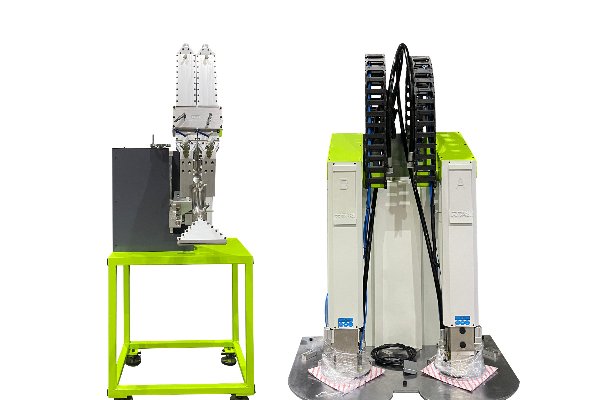

Liquid Injection Molding Machines process
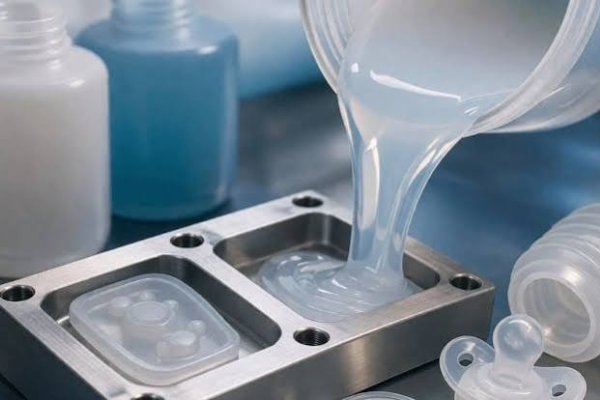
LSR injection molding will be more and more popular all over the word in the coming days. TYM is a leading LSR injection molding Company which offers custom silicone mould making services as well as injection mold solutions in China.
Now let's talk about the key components of the conventional, two-part liquid injection molding process are basically as below:
Supply drums: The plungers, or liquid silicone supply containers, connect to the pumping system. Many two-container setups include a third container for pigment.
Metering units: The metering device pumps two liquid materials in predetermined ratios, which ensures a concurrent release at a steady ratio.
Mixers: Once the liquid forming materials pass through the metering unit, a static mixer combines the materials. The blended material is pressurized and pushed into the mold.
Injectors: This device moves the LSR forming material into the pumping mechanism under pressurized force. The machine operator has the capability to adjust the pressure, as well as the injection rate. This parameter differs according to the project specifications.
Nozzles: The liquid compound flows into the mold through a nozzle that has an automatic shut-off valve. This valve prevents the mixture from leaking or the mold from overfilling.
Let's put it this way ,the basic liquid injection molding machine should be as lean and as compact as possible and secondary devices should be configured to address the needs of a particular project in an ideal production environment.