
Recent Posts
-
![Meet TYM at K 2025 -The World’ s No.1 Trade Fair for Plastics and Rubber]() Meet TYM at K 2025 -The World’ s No.1 Trade Fair for Plastics and Rubber
Meet TYM at K 2025 -The World’ s No.1 Trade Fair for Plastics and RubberWelcome to the World’s No.1 Trade Fair for Plastics and Rubber -K 2025, taking place from October 8–15, 2025 at Messe Düsseldorf, Germany. As a professional LSR injection molding machine, mold, and robot solution provider, TYM Technology Co., Ltd. is proud to present our latest innovations at Booth 16E77.
09/23/2025
-
![Self-Bonding LSR: How Self-Adhesive Liquid Silicone Simplifies Multi-Material Overmolding]() Self-Bonding LSR: How Self-Adhesive Liquid Silicone Simplifies Multi-Material Overmolding
Self-Bonding LSR: How Self-Adhesive Liquid Silicone Simplifies Multi-Material OvermoldingIf you manufacture multi-material silicone parts, the bonding step is often the hidden bottleneck. Traditional liquid silicone rubber (LSR) overmolding relies on a separately applied primer to make the silicone stick to a plastic or metal substrate.
06/18/2026
-
![Smart Automation in Silicone Manufacturing: Improving Consistency and Reducing Labor Costs]() Smart Automation in Silicone Manufacturing: Improving Consistency and Reducing Labor Costs
Smart Automation in Silicone Manufacturing: Improving Consistency and Reducing Labor CostsLabor shortages, rising wage costs, and increasing quality expectations are pushing silicone product manufacturers toward greater automation. For liquid silicone rubber (LSR) production specifically, automation is not just about reducing headcount — it directly impacts part consistency, contamination control, and overall production efficiency.
06/12/2026
-
![Shot Size Accuracy in LSR Molding: The Hidden Factor Behind Product Quality]() Shot Size Accuracy in LSR Molding: The Hidden Factor Behind Product Quality
Shot Size Accuracy in LSR Molding: The Hidden Factor Behind Product QualityPrecision is the cornerstone of liquid silicone rubber manufacturing. Yet many manufacturers overlook one critical parameter that determines product consistency: shot size accuracy.
06/10/2026
-
![how to Optimize LSR Injection Molding Machine Performance Through Predictive Maintenance]() how to Optimize LSR Injection Molding Machine Performance Through Predictive Maintenance
how to Optimize LSR Injection Molding Machine Performance Through Predictive MaintenanceIn the competitive landscape of liquid silicone rubber manufacturing, machine downtime can cost manufacturers thousands of dollars per hour.
06/10/2026
-
![How Automated Material Feeding Improves LSR Manufacturing Efficiency]() How Automated Material Feeding Improves LSR Manufacturing Efficiency
How Automated Material Feeding Improves LSR Manufacturing EfficiencyAs labor costs continue to rise and quality requirements become stricter, manufacturers are increasingly adopting automated material feeding systems in liquid silicone rubber production.
06/09/2026
-
![How Does Vacuum Assistance Improve LSR Injection Molding Quality?]() How Does Vacuum Assistance Improve LSR Injection Molding Quality?
How Does Vacuum Assistance Improve LSR Injection Molding Quality?In liquid silicone rubber (LSR) manufacturing, product quality is heavily influenced by how effectively air is removed from the mold cavity. Trapped air can lead to bubbles, incomplete filling, surface defects, and reduced product consistency.
06/08/2026
-
![Why Is Shot Size Accuracy Important in Liquid Silicone Rubber Molding?]() Why Is Shot Size Accuracy Important in Liquid Silicone Rubber Molding?
Why Is Shot Size Accuracy Important in Liquid Silicone Rubber Molding?Precision is one of the key advantages of liquid silicone rubber molding. However, achieving consistent product quality depends heavily on accurate shot size control.
06/08/2026
-
![How Clamp Force Selection Affects LSR Injection Molding Performance]() How Clamp Force Selection Affects LSR Injection Molding Performance
How Clamp Force Selection Affects LSR Injection Molding PerformanceClamping force is one of the most fundamental parameters in liquid silicone rubber injection molding. While many manufacturers focus heavily on injection pressure, metering accuracy, and mold design, the selection of proper clamp force directly influences product quality, mold lifespan, process stability, and overall production efficiency.
06/03/2026
-
![How Closed-Loop Injection Control Improves LSR Molding Stability]() How Closed-Loop Injection Control Improves LSR Molding Stability
How Closed-Loop Injection Control Improves LSR Molding StabilityAdvanced manufacturing systems are now integrating digital monitoring, servo-driven motion control, and intelligent process optimization to reduce variability during molding cycles.
05/29/2026

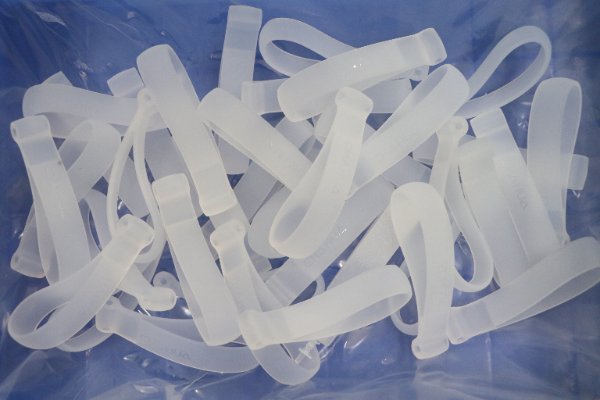
What Are the Key Properties of Liquid Silicone Rubber (LSR)?
What Makes LSR Different from Traditional Rubbers?
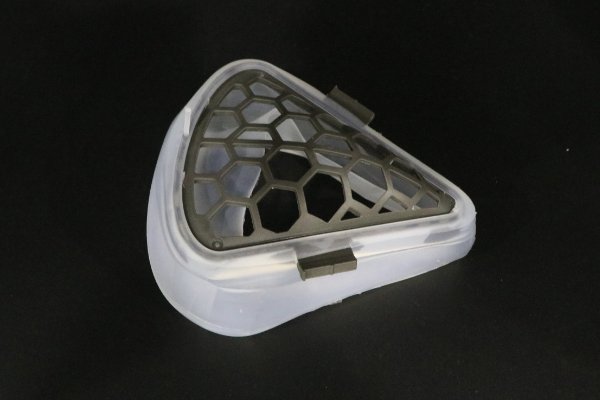
Liquid Silicone Rubber (LSR) is a platinum-cured elastomer with a unique molecular structure that gives it exceptional thermal stability and chemical resistance. Unlike solid rubbers, LSR starts as a low-viscosity liquid, allowing it to flow into complex mold geometries with ease. Its ability to remain flexible across a wide temperature range makes it ideal for demanding applications.
Why Is Thermal Stability Important for LSR Applications?
LSR maintains its physical properties from -60°C to over 200°C, making it suitable for environments with extreme temperature fluctuations. This stability ensures long-term performance in automotive under-the-hood components and medical devices that undergo repeated sterilization cycles without degrading or losing elasticity.
How Does LSR Resist Chemical Degradation?
Due to its inert silicon-oxygen backbone, LSR shows excellent resistance to ozone, UV radiation, and many chemicals including acids and bases. This makes it a preferred material for outdoor applications and industrial components exposed to harsh substances. Its non-reactivity also supports biocompatibility in medical uses.
What Mechanical Advantages Does LSR Offer?
LSR exhibits high tear strength, excellent elongation, and low compression set, meaning it returns to its original shape after deformation. These properties are crucial for sealing applications, gaskets, and flexible housings. Its low shrink rate during curing also contributes to tight tolerances and consistent part dimensions.