
Recent Posts
-
![Meet TYM at K 2025 -The World’ s No.1 Trade Fair for Plastics and Rubber]() Meet TYM at K 2025 -The World’ s No.1 Trade Fair for Plastics and Rubber
Meet TYM at K 2025 -The World’ s No.1 Trade Fair for Plastics and RubberWelcome to the World’s No.1 Trade Fair for Plastics and Rubber -K 2025, taking place from October 8–15, 2025 at Messe Düsseldorf, Germany. As a professional LSR injection molding machine, mold, and robot solution provider, TYM Technology Co., Ltd. is proud to present our latest innovations at Booth 16E77.
09/23/2025
-
![Liquid Silicone Rubber Market 2026: Size, Growth & Demand Drivers]() Liquid Silicone Rubber Market 2026: Size, Growth & Demand Drivers
Liquid Silicone Rubber Market 2026: Size, Growth & Demand DriversThe global liquid silicone rubber (LSR) market is valued at roughly USD 3.4-3.8 billion in 2026 and growing about 7-9% annually, led by medical-grade demand (~44% of revenue) and rising EV production. Asia-Pacific dominates manufacturing capacity.
06/26/2026
-
![Self-Bonding LSR: How Self-Adhesive Liquid Silicone Simplifies Multi-Material Overmolding]() Self-Bonding LSR: How Self-Adhesive Liquid Silicone Simplifies Multi-Material Overmolding
Self-Bonding LSR: How Self-Adhesive Liquid Silicone Simplifies Multi-Material OvermoldingIf you manufacture multi-material silicone parts, the bonding step is often the hidden bottleneck. Traditional liquid silicone rubber (LSR) overmolding relies on a separately applied primer to make the silicone stick to a plastic or metal substrate.
06/18/2026
-
![Smart Automation in Silicone Manufacturing: Improving Consistency and Reducing Labor Costs]() Smart Automation in Silicone Manufacturing: Improving Consistency and Reducing Labor Costs
Smart Automation in Silicone Manufacturing: Improving Consistency and Reducing Labor CostsLabor shortages, rising wage costs, and increasing quality expectations are pushing silicone product manufacturers toward greater automation. For liquid silicone rubber (LSR) production specifically, automation is not just about reducing headcount — it directly impacts part consistency, contamination control, and overall production efficiency.
06/12/2026
-
![Shot Size Accuracy in LSR Molding: The Hidden Factor Behind Product Quality]() Shot Size Accuracy in LSR Molding: The Hidden Factor Behind Product Quality
Shot Size Accuracy in LSR Molding: The Hidden Factor Behind Product QualityPrecision is the cornerstone of liquid silicone rubber manufacturing. Yet many manufacturers overlook one critical parameter that determines product consistency: shot size accuracy.
06/10/2026
-
![how to Optimize LSR Injection Molding Machine Performance Through Predictive Maintenance]() how to Optimize LSR Injection Molding Machine Performance Through Predictive Maintenance
how to Optimize LSR Injection Molding Machine Performance Through Predictive MaintenanceIn the competitive landscape of liquid silicone rubber manufacturing, machine downtime can cost manufacturers thousands of dollars per hour.
06/10/2026
-
![How Automated Material Feeding Improves LSR Manufacturing Efficiency]() How Automated Material Feeding Improves LSR Manufacturing Efficiency
How Automated Material Feeding Improves LSR Manufacturing EfficiencyAs labor costs continue to rise and quality requirements become stricter, manufacturers are increasingly adopting automated material feeding systems in liquid silicone rubber production.
06/09/2026
-
![How Does Vacuum Assistance Improve LSR Injection Molding Quality?]() How Does Vacuum Assistance Improve LSR Injection Molding Quality?
How Does Vacuum Assistance Improve LSR Injection Molding Quality?In liquid silicone rubber (LSR) manufacturing, product quality is heavily influenced by how effectively air is removed from the mold cavity. Trapped air can lead to bubbles, incomplete filling, surface defects, and reduced product consistency.
06/08/2026
-
![Why Is Shot Size Accuracy Important in Liquid Silicone Rubber Molding?]() Why Is Shot Size Accuracy Important in Liquid Silicone Rubber Molding?
Why Is Shot Size Accuracy Important in Liquid Silicone Rubber Molding?Precision is one of the key advantages of liquid silicone rubber molding. However, achieving consistent product quality depends heavily on accurate shot size control.
06/08/2026
-
![How Clamp Force Selection Affects LSR Injection Molding Performance]() How Clamp Force Selection Affects LSR Injection Molding Performance
How Clamp Force Selection Affects LSR Injection Molding PerformanceClamping force is one of the most fundamental parameters in liquid silicone rubber injection molding. While many manufacturers focus heavily on injection pressure, metering accuracy, and mold design, the selection of proper clamp force directly influences product quality, mold lifespan, process stability, and overall production efficiency.
06/03/2026


Liquid Silicone Rubber Market 2026: Size, Growth & Demand Drivers
The global liquid silicone rubber (LSR) market is worth roughly USD 3.4-3.8 billion in 2026, expanding at an estimated 7-9% CAGR. Growth is driven mainly by medical devices and electric-vehicle components. This briefing summarizes the latest market size, leading segments, and demand drivers for B2B buyers, product engineers, and procurement teams.
How big is the liquid silicone rubber market in 2026?
LSR market estimates for 2026 range from about USD 2.5 billion to USD 3.8 billion, with a consensus mid-point near USD 3.4 billion and a CAGR of 7-9%. The spread reflects different scopes and methodologies across research firms, but every major source agrees the market is growing faster than most commodity elastomers.
Research source | 2026 market size | Reported CAGR |
MarketsandMarkets | ~USD 3.82 billion (by 2026) | 8.3% |
Persistence Market Research | ~USD 3.6 billion | 8.7% (2026-2033) |
Business Research Insights | ~USD 2.46 billion | 6.2% (to 2034) |
Consensus working range | USD 3.4-3.8 billion | ~7-9% |
Which segments lead LSR demand?
Medical-grade LSR leads the market, accounting for roughly 44% of grade-segment revenue in 2026. Medical-grade material typically sells at 2-3 times the price of industrial grades because of higher raw-material purity, biological testing, documentation, and supply-chain traceability. Other major segments include automotive, electrical and electronics, and consumer and baby-care products.
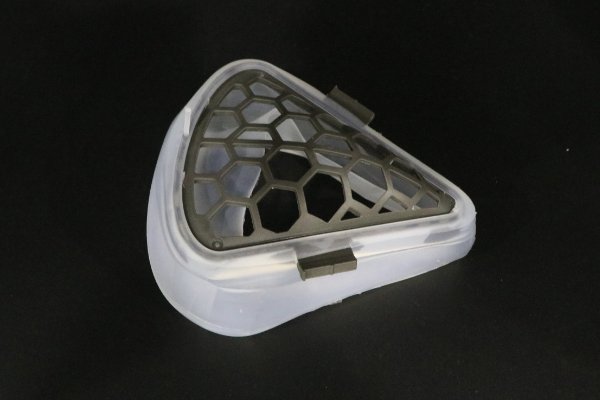
• Medical: catheters, respiratory mask seals, syringe plungers, hearing-aid parts, wearable biosensor interfaces.
• Automotive & EV: battery and connector seals, gaskets, thermal interface parts, ignition components.
• Electronics: waterproof seals, keypads, and protective overmolding for consumer devices.
• Baby & consumer: pacifiers, bottle nipples, kitchenware, and wearable straps.
Why is medical-grade LSR growing fastest?
Medical-grade LSR grows fastest because regulators require certified biocompatible materials for any polymer in patient contact. Materials must meet ISO 10993, USP Class VI, and FDA requirements that confirm they are non-toxic, non-cytotoxic, and safe for prolonged human contact. Rising surgical volumes, home-care devices, and wearable monitoring all expand demand for compliant LSR.
How are EVs and electronics reshaping demand?
Electric-vehicle production is now a primary growth engine for LSR. EVs need sealing and insulation that survive heat, vibration, and moisture—roles where LSR outperforms thermoplastics and conventional rubber. In electronics, the shift to waterproof, miniaturized devices increases use of precision LSR overmolding and micro-molding.
Which regions drive the market?
Asia-Pacific leads both LSR consumption and manufacturing capacity, with China the central production hub. Strong electronics, automotive, and medical manufacturing bases, plus competitive equipment and tooling supply, keep the region ahead of North America and Europe in volume growth. This concentration also makes Asia-Pacific the most cost-effective place to source LSR machines and molds.
What it means for buyers in 2026
For procurement teams and product engineers, a growing, medical-led market means more material choice and stronger supplier ecosystems—but also tighter compliance expectations. Buyers planning new silicone programs should lock in material certifications early, design for efficient molding, and choose equipment partners that can scale from prototype to validated mass production.
FAQs
Q:What is the LSR market size in 2026?
Estimates place the global liquid silicone rubber market at roughly USD 3.4-3.8 billion in 2026, with some narrower-scope reports as low as USD 2.5 billion. The differences come from how each firm defines product grades and end-use applications, so a range is more reliable than a single figure.
Q:What is the LSR market growth rate (CAGR)?
Most forecasts put LSR market growth at about 7-9% CAGR through the early 2030s. This outpaces many commodity elastomers and is sustained by medical devices, electric vehicles, and waterproof electronics rather than by any single industry.
Q:Which industry uses the most LSR?
Medical is the largest grade segment, at roughly 44% of revenue in 2026, because patient-contact devices require biocompatible, certified silicone. Automotive, electronics, and baby-care products make up most of the remaining demand.
Q:Why is medical-grade LSR more expensive?
Medical-grade LSR usually costs 2-3 times more than industrial grades. The premium covers higher raw-material purity, ISO 10993 and USP Class VI biological testing, full documentation, and strict supply-chain traceability needed for regulatory approval.