
Recent Posts
-
![Meet TYM at K 2025 -The World’ s No.1 Trade Fair for Plastics and Rubber]() Meet TYM at K 2025 -The World’ s No.1 Trade Fair for Plastics and Rubber
Meet TYM at K 2025 -The World’ s No.1 Trade Fair for Plastics and RubberWelcome to the World’s No.1 Trade Fair for Plastics and Rubber -K 2025, taking place from October 8–15, 2025 at Messe Düsseldorf, Germany. As a professional LSR injection molding machine, mold, and robot solution provider, TYM Technology Co., Ltd. is proud to present our latest innovations at Booth 16E77.
09/23/2025
-
![Smart Automation in Silicone Manufacturing: Improving Consistency and Reducing Labor Costs]() Smart Automation in Silicone Manufacturing: Improving Consistency and Reducing Labor Costs
Smart Automation in Silicone Manufacturing: Improving Consistency and Reducing Labor CostsLabor shortages, rising wage costs, and increasing quality expectations are pushing silicone product manufacturers toward greater automation. For liquid silicone rubber (LSR) production specifically, automation is not just about reducing headcount — it directly impacts part consistency, contamination control, and overall production efficiency.
06/12/2026
-
![Shot Size Accuracy in LSR Molding: The Hidden Factor Behind Product Quality]() Shot Size Accuracy in LSR Molding: The Hidden Factor Behind Product Quality
Shot Size Accuracy in LSR Molding: The Hidden Factor Behind Product QualityPrecision is the cornerstone of liquid silicone rubber manufacturing. Yet many manufacturers overlook one critical parameter that determines product consistency: shot size accuracy.
06/10/2026
-
![how to Optimize LSR Injection Molding Machine Performance Through Predictive Maintenance]() how to Optimize LSR Injection Molding Machine Performance Through Predictive Maintenance
how to Optimize LSR Injection Molding Machine Performance Through Predictive MaintenanceIn the competitive landscape of liquid silicone rubber manufacturing, machine downtime can cost manufacturers thousands of dollars per hour.
06/10/2026
-
![How Automated Material Feeding Improves LSR Manufacturing Efficiency]() How Automated Material Feeding Improves LSR Manufacturing Efficiency
How Automated Material Feeding Improves LSR Manufacturing EfficiencyAs labor costs continue to rise and quality requirements become stricter, manufacturers are increasingly adopting automated material feeding systems in liquid silicone rubber production.
06/09/2026
-
![How Does Vacuum Assistance Improve LSR Injection Molding Quality?]() How Does Vacuum Assistance Improve LSR Injection Molding Quality?
How Does Vacuum Assistance Improve LSR Injection Molding Quality?In liquid silicone rubber (LSR) manufacturing, product quality is heavily influenced by how effectively air is removed from the mold cavity. Trapped air can lead to bubbles, incomplete filling, surface defects, and reduced product consistency.
06/08/2026
-
![Why Is Shot Size Accuracy Important in Liquid Silicone Rubber Molding?]() Why Is Shot Size Accuracy Important in Liquid Silicone Rubber Molding?
Why Is Shot Size Accuracy Important in Liquid Silicone Rubber Molding?Precision is one of the key advantages of liquid silicone rubber molding. However, achieving consistent product quality depends heavily on accurate shot size control.
06/08/2026
-
![How Clamp Force Selection Affects LSR Injection Molding Performance]() How Clamp Force Selection Affects LSR Injection Molding Performance
How Clamp Force Selection Affects LSR Injection Molding PerformanceClamping force is one of the most fundamental parameters in liquid silicone rubber injection molding. While many manufacturers focus heavily on injection pressure, metering accuracy, and mold design, the selection of proper clamp force directly influences product quality, mold lifespan, process stability, and overall production efficiency.
06/03/2026
-
![How Closed-Loop Injection Control Improves LSR Molding Stability]() How Closed-Loop Injection Control Improves LSR Molding Stability
How Closed-Loop Injection Control Improves LSR Molding StabilityAdvanced manufacturing systems are now integrating digital monitoring, servo-driven motion control, and intelligent process optimization to reduce variability during molding cycles.
05/29/2026
-
![Energy Consumption Optimization in Modern LSR Injection Molding Machines]() Energy Consumption Optimization in Modern LSR Injection Molding Machines
Energy Consumption Optimization in Modern LSR Injection Molding MachinesAs manufacturing industries move toward sustainable and cost-efficient production models, energy optimization has become an increasingly important factor in liquid silicone rubber injection molding.
05/28/2026

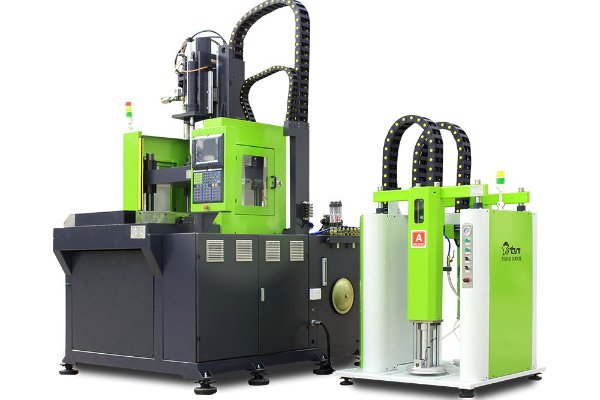
LSR Overmold Technology | Liquid Silicone Rubber Injection Molding
LSR Overmold Technology | Liquid Silicone Rubber Injection Molding
Silicone overmolding is a process where liquid silicone rubber (LSR) is molded directly over a substrate, such as plastic or metal. Instead of producing the silicone part separately and then bonding it later, the substrate is placed into the mold, and LSR is injected around it. Once cured, the silicone becomes an integrated outer layer of the part.
This method creates strong adhesion between materials, forming a seamless structure that improves functionality, comfort, and aesthetics. In many baby products and kitchen tools, LSR overmolding is essential because the components must be soft, food-grade, and resistant to high temperatures.
• Cleaner appearance and better parting lines
Overmolding molds the silicone directly on the substrate, allowing the mold to close tightly before injection. This results in finer parting lines and a smoother, more premium appearance.
• Strong structural bonding
The silicone chemically bonds to plastic or metal during curing, enhancing durability and preventing detachment even after long-term use or repeated cleaning.
For example, silicone plates and silicone spoons , both raw materials need to use food-grade liquid silicone raw materials, and need to be produced in A dust-free workshop.
Silicone plate it is simple, usually use common runner mold for production, demolding by manual, and the hardness of raw materials is generally selected above 50 shore A.
Silicone spoons generally use the LSR overmolding process. Plastic or metal parts are placed on the corresponding position of silicone mold , then inject liquid silicone raw material to mold to molding the finish spoon, usually using glue to bond with the silicone part, and these plastic and metal parts also need to reach food grade and high temperature resistance.
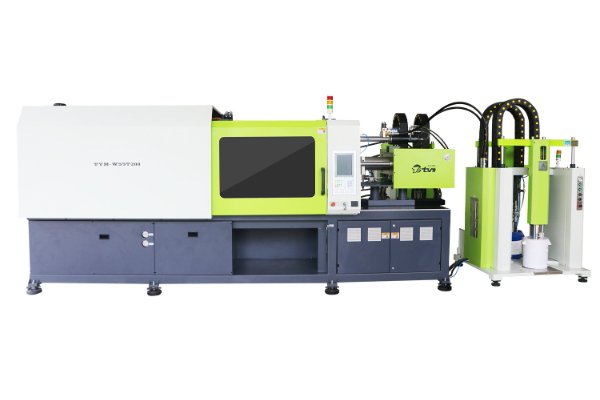
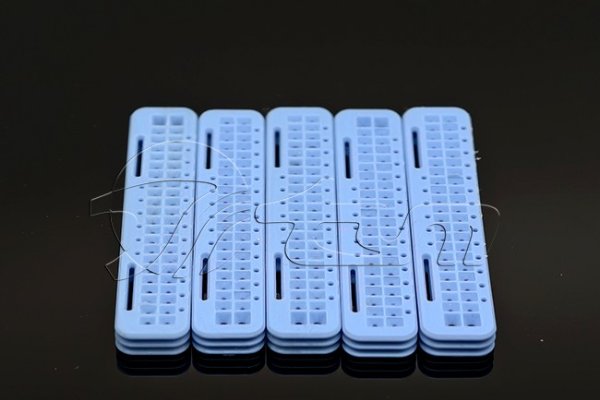
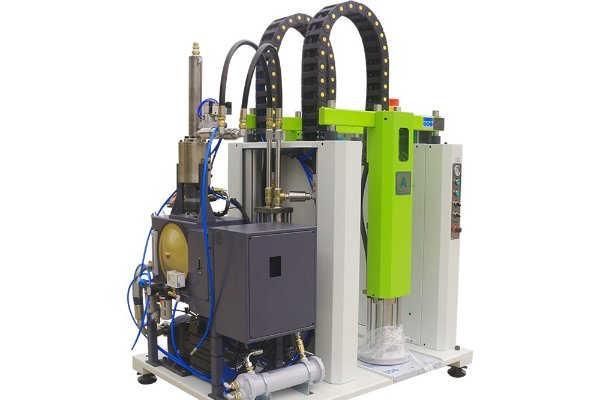
TYM can provide first-class various of LSR injection molding machines, precision silicone and plastic molds and other LSR equipment to meet your production needs of silicone baby tableware.
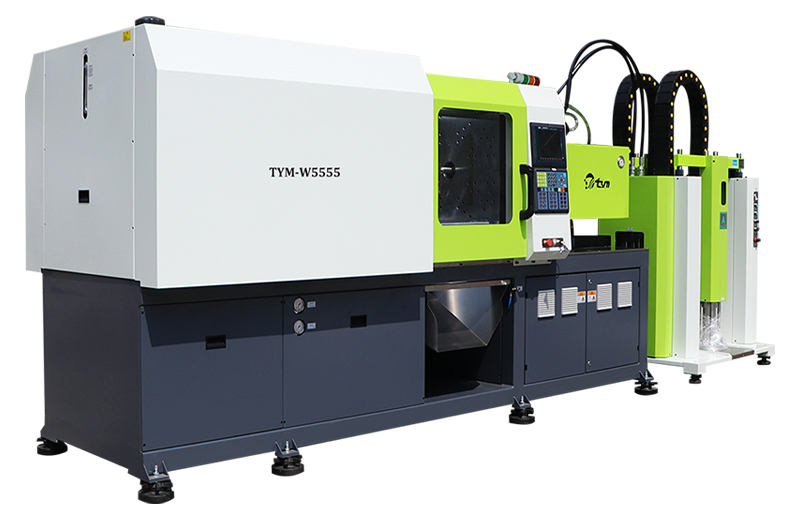
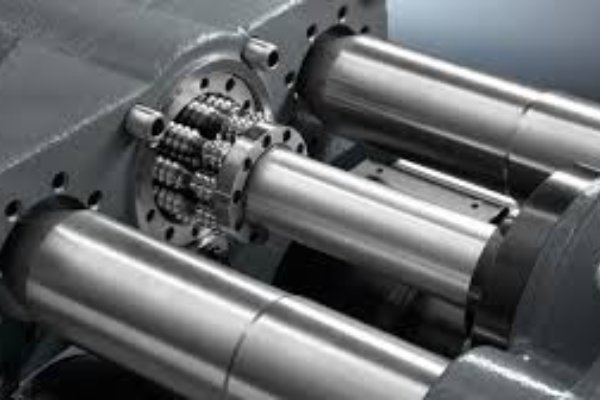
150T Horizontal LSR injection molding machine TYM-W5555 Specifications
Clamping Unit | |
Clamping force | 150T |
Opening stroke | 200 -700m |
Tie-Bars space | 550*550mm |
Ejection force | 4T |
Ejection stroke | 150mm |
Others | |
Motor power | 12kw |
Voltage & current | 380V,50hz |
Pump Pressure | 20mpa |
Time schedule controller (TCON) | 8 sets |
Machine Weight | 7.5T |
Machine dimension | 4.3*1.5*2.1m |
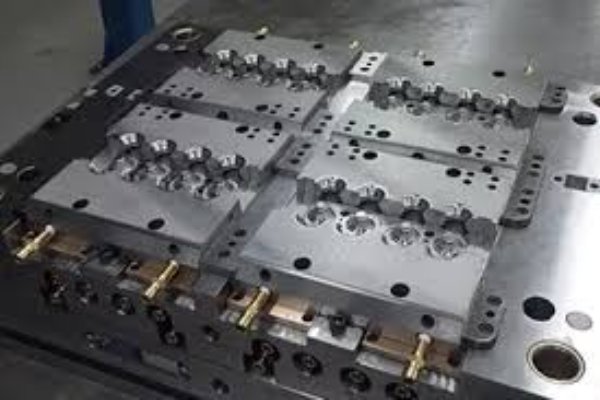
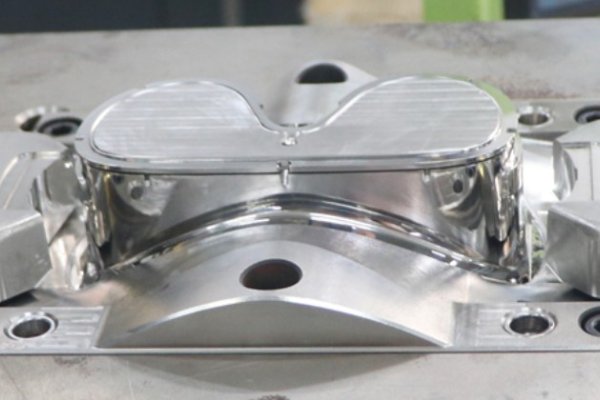
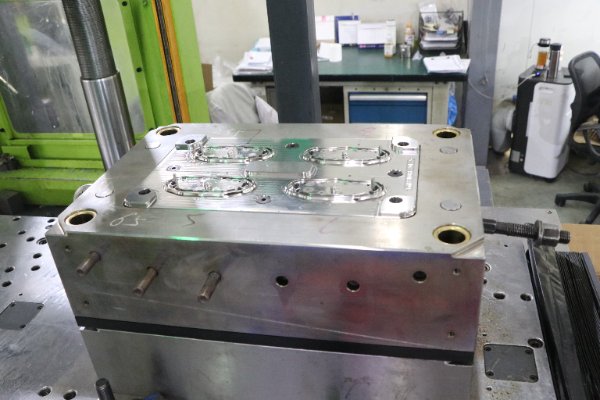
LSR Mold for food plate
Mold details | |
Mold base material | P20 (customizable) |
Mold core/insert material | S136 (customizable) |
Cavity | 2 cvities (customizable) |
Runner | common runner |
Demolding | demolding by manual |