
Recent Posts
-
![Meet TYM at K 2025 -The World’ s No.1 Trade Fair for Plastics and Rubber]() Meet TYM at K 2025 -The World’ s No.1 Trade Fair for Plastics and Rubber
Meet TYM at K 2025 -The World’ s No.1 Trade Fair for Plastics and RubberWelcome to the World’s No.1 Trade Fair for Plastics and Rubber -K 2025, taking place from October 8–15, 2025 at Messe Düsseldorf, Germany. As a professional LSR injection molding machine, mold, and robot solution provider, TYM Technology Co., Ltd. is proud to present our latest innovations at Booth 16E77.
09/23/2025
-
![LSR Cold Runner Systems: Cut Waste & Cost]() LSR Cold Runner Systems: Cut Waste & Cost
LSR Cold Runner Systems: Cut Waste & CostLSR cold runner system is the single fastest way to cut material waste and labor out of liquid silicone rubber molding. By keeping the silicone liquid until it reaches the cavity, it eliminates cured runners and trimming entirely. This guide helps process engineers and buyers decide when a cold runner pays for itself.
06/30/2026
-
![How to Select LSR Injection Molding Machine Tonnage]() How to Select LSR Injection Molding Machine Tonnage
How to Select LSR Injection Molding Machine TonnageChoosing the right clamping force is the single most consequential spec decision when buying a liquid silicone rubber (LSR) injection molding machine. Pick too little and you fight flash on every shot; pick too much and you pay for energy and floor space you never use.
06/29/2026
-
![Liquid Silicone Rubber Market 2026: Size, Growth & Demand Drivers]() Liquid Silicone Rubber Market 2026: Size, Growth & Demand Drivers
Liquid Silicone Rubber Market 2026: Size, Growth & Demand DriversThe global liquid silicone rubber (LSR) market is valued at roughly USD 3.4-3.8 billion in 2026 and growing about 7-9% annually, led by medical-grade demand (~44% of revenue) and rising EV production. Asia-Pacific dominates manufacturing capacity.
06/26/2026
-
![Self-Bonding LSR: How Self-Adhesive Liquid Silicone Simplifies Multi-Material Overmolding]() Self-Bonding LSR: How Self-Adhesive Liquid Silicone Simplifies Multi-Material Overmolding
Self-Bonding LSR: How Self-Adhesive Liquid Silicone Simplifies Multi-Material OvermoldingIf you manufacture multi-material silicone parts, the bonding step is often the hidden bottleneck. Traditional liquid silicone rubber (LSR) overmolding relies on a separately applied primer to make the silicone stick to a plastic or metal substrate.
06/18/2026
-
![Smart Automation in Silicone Manufacturing: Improving Consistency and Reducing Labor Costs]() Smart Automation in Silicone Manufacturing: Improving Consistency and Reducing Labor Costs
Smart Automation in Silicone Manufacturing: Improving Consistency and Reducing Labor CostsLabor shortages, rising wage costs, and increasing quality expectations are pushing silicone product manufacturers toward greater automation. For liquid silicone rubber (LSR) production specifically, automation is not just about reducing headcount — it directly impacts part consistency, contamination control, and overall production efficiency.
06/12/2026
-
![Shot Size Accuracy in LSR Molding: The Hidden Factor Behind Product Quality]() Shot Size Accuracy in LSR Molding: The Hidden Factor Behind Product Quality
Shot Size Accuracy in LSR Molding: The Hidden Factor Behind Product QualityPrecision is the cornerstone of liquid silicone rubber manufacturing. Yet many manufacturers overlook one critical parameter that determines product consistency: shot size accuracy.
06/10/2026
-
![how to Optimize LSR Injection Molding Machine Performance Through Predictive Maintenance]() how to Optimize LSR Injection Molding Machine Performance Through Predictive Maintenance
how to Optimize LSR Injection Molding Machine Performance Through Predictive MaintenanceIn the competitive landscape of liquid silicone rubber manufacturing, machine downtime can cost manufacturers thousands of dollars per hour.
06/10/2026
-
![How Automated Material Feeding Improves LSR Manufacturing Efficiency]() How Automated Material Feeding Improves LSR Manufacturing Efficiency
How Automated Material Feeding Improves LSR Manufacturing EfficiencyAs labor costs continue to rise and quality requirements become stricter, manufacturers are increasingly adopting automated material feeding systems in liquid silicone rubber production.
06/09/2026
-
![How Does Vacuum Assistance Improve LSR Injection Molding Quality?]() How Does Vacuum Assistance Improve LSR Injection Molding Quality?
How Does Vacuum Assistance Improve LSR Injection Molding Quality?In liquid silicone rubber (LSR) manufacturing, product quality is heavily influenced by how effectively air is removed from the mold cavity. Trapped air can lead to bubbles, incomplete filling, surface defects, and reduced product consistency.
06/08/2026


LSR Cold Runner Systems: Cut Waste & Cost
What is an LSR cold runner system?
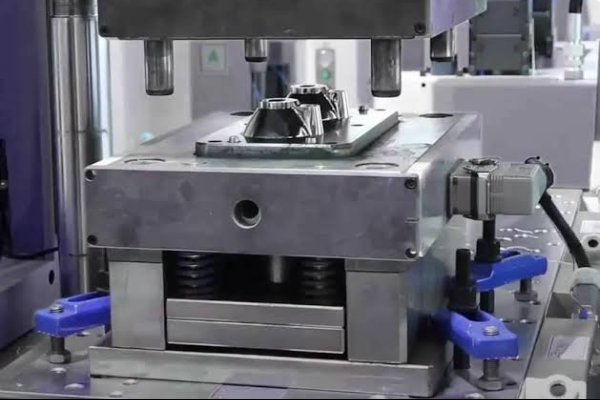
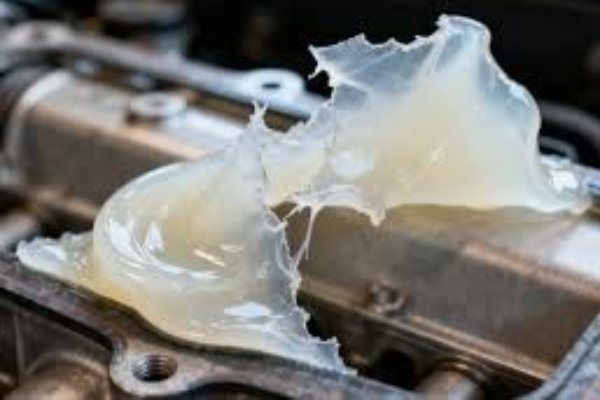
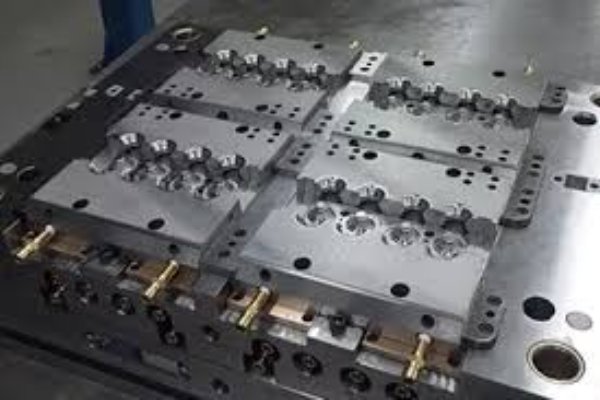
In short: a cold runner is a temperature-controlled manifold (often called a cold deck) that holds LSR in its uncured liquid state right up to the gate of each cavity. Because liquid silicone cures with heat, the runner is cooled with water channels while the mold cavity is heated to cure the part. Only the part vulcanizes; the material in the runner stays liquid and is injected into the next shot.
This is the opposite logic of thermoplastic molding, where a hot runner keeps plastic molten. In LSR, the runner must stay cold and the cavity hot. The result is a runnerless process: no sprue, no cold slug, no runner to cut off, recycle, or scrap.
How does a cold runner cut LSR waste and cost?
Directly: it removes the runner from the equation. Liquid silicone is an expensive two-part material, and on small parts the cured runner can weigh more than the part itself. A cold runner system can eliminate close to 100% of runner waste, which on a high-cavity tool often translates into 10-30% lower material consumption per part.
The savings compound. With no runners to remove there is no deflashing or trimming station, which lowers labor and removes a source of cosmetic rejects. Because the gate is positioned precisely and shut cleanly, parts come off cleaner and ready for automated removal. Cold runners also draw far less electricity than a heated manifold would, since there is no need to constantly warm the runner.
What is a valve-gated cold runner, and why does it matter?
A valve-gated cold runner adds a mechanically actuated shut-off pin (needle valve) at each gate. The pin opens during injection and closes before the mold opens. This matters for three reasons: it stops material drool and stringing between shots, it gives clean gate vestige with no manual trimming, and it lets you balance fill across cavities by controlling each gate independently.
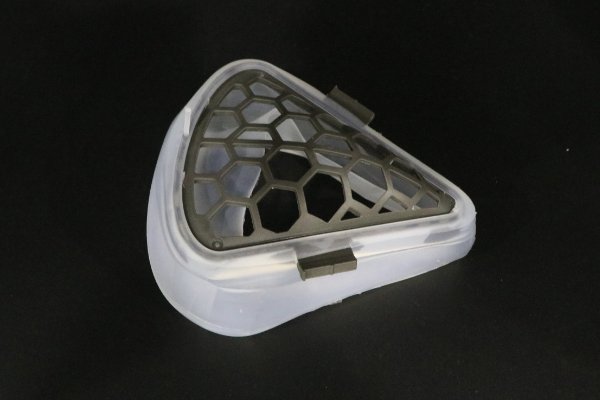
For multi-cavity medical, infant-care, and micro parts, valve gating is what makes fully automated, lights-out LSR production realistic. Open (thermal-gate) cold runners are simpler and cheaper but can leave a small gate mark and are better suited to less cosmetic parts.
Cold runner vs hot runner vs conventional sprue: what is the difference?
The table compares the three approaches for LSR. Note that a true hot runner is a thermoplastic concept; in silicone the practical choice is cold runner versus a conventional cold-sprue (open) tool.
Factor | Cold runner (cooled deck) | Conventional sprue tool |
Runner waste | Near zero (runnerless) | High - full runner cured each shot |
Trimming/deflash | Eliminated at the gate | Manual or secondary station |
Material cost/part | Lowest | Higher (10-30% more on small parts) |
Tooling cost | Higher upfront | Lower upfront |
Automation fit | Excellent (clean parts) | Limited (needs trimming) |
Best for | Multi-cavity, high volume | Prototypes, low volume, large single parts |
When is a cold runner worth the higher tooling cost?
The rule of thumb: a cold runner pays back fastest on high-cavity, high-volume parts where runner mass is significant relative to part mass. A 16- or 32-cavity micro-valve or duckbill tool running millions of shots a year can recover the added tooling cost in months purely on saved silicone and eliminated trimming labor.
It is harder to justify for a single large part run at low volume, where the runner is a small fraction of part mass and trimming is occasional. A quick payback estimate: multiply runner weight per shot by silicone cost and annual shot count, then add the labor of any trimming station you remove, and compare that yearly saving against the cold-runner tooling premium.
What are the design essentials of a reliable cold runner?
A cold runner only delivers if the thermal separation between the cold deck and the hot cavity is well engineered. Four essentials:
· Thermal isolation: insulation plates and air gaps keep heat from the 170-200 C cavity from creeping into the cooled deck and pre-curing the runner.
· Cooling channels: water cooling holds the deck near 15-25 C so the LSR stays liquid and stable between shots.
· Balanced flow and needle valves: equal flow length and individually controlled gates ensure every cavity fills evenly, which is critical for tight tolerance parts.
· Precise metering upstream: the machine's dosing pump must hold the A:B ratio (typically 1:1) so the well-designed runner is fed consistent, bubble-free material.
How TYM engineers cold-runner LSR systems
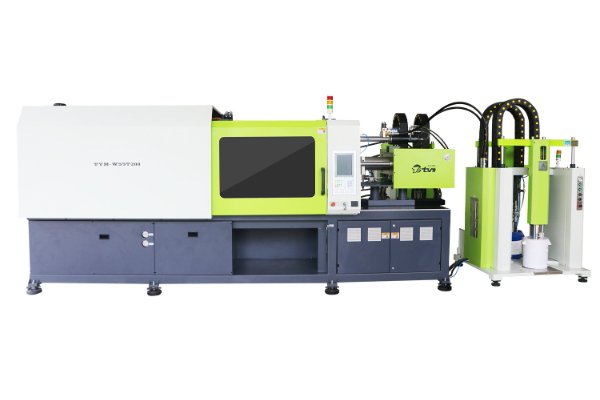
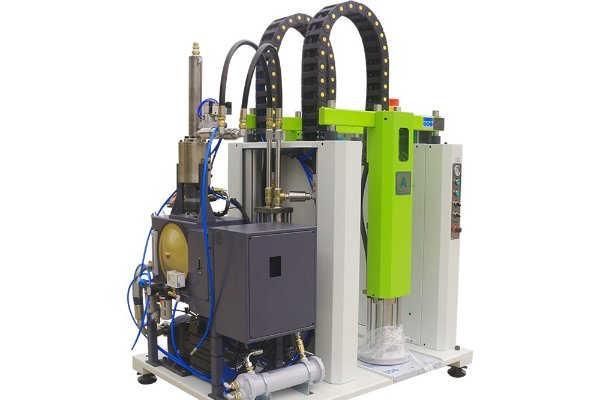
TYM designs LSR injection molding machines, cold-runner silicone molds, and turnkey automated production systems for medical, automotive, infant-care, and industrial customers. TYM matches the cold-runner type (open or valve-gated), cavity layout, and machine metering to the part's cosmetic and volume requirements, then integrates automated part removal for clean, runnerless output. The aim is precise, efficient, intelligent production with the lowest sustainable cost per part.
FAQs
Q: Does a cold runner really eliminate all silicone waste?
A: It eliminates the runner itself, which is the largest source of LSR scrap. A well-designed valve-gated cold runner can remove close to 100% of runner waste, leaving only the cured part. Minor losses can still occur from purging, color changes, or rejects, but per-part material consumption typically drops 10-30% on small multi-cavity parts.
Q: What is the difference between an open and valve-gated cold runner?
A: An open (thermal) cold runner has no shut-off pin and is simpler and cheaper, but may leave a small gate mark and can drool between shots. A valve-gated cold runner uses a needle valve at each gate to give clean gate vestige, prevent stringing, and allow independent cavity balancing, which is preferred for cosmetic and high-volume parts.
Q: Is a cold runner worth it for low-volume LSR production?
A: Often not. The added tooling cost is hardest to justify when volumes are low or the runner is a small fraction of part mass. For prototypes, large single parts, or short runs, a conventional sprue tool is usually more economical. Cold runners shine on high-cavity, high-volume programs.
Q: Why must an LSR runner be cooled instead of heated?
A: Because liquid silicone cures with heat, the reverse of thermoplastics. To keep the runner material reusable for the next shot, the manifold is cooled (about 15-25 C) so the LSR stays liquid, while only the heated cavity (170-200 C) cures the part.