
Recent Posts
-
![Meet TYM at K 2025 -The World’ s No.1 Trade Fair for Plastics and Rubber]() Meet TYM at K 2025 -The World’ s No.1 Trade Fair for Plastics and Rubber
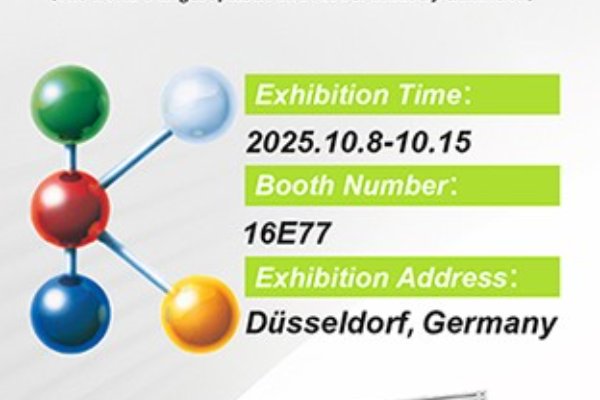
Meet TYM at K 2025 -The World’ s No.1 Trade Fair for Plastics and RubberWelcome to the World’s No.1 Trade Fair for Plastics and Rubber -K 2025, taking place from October 8–15, 2025 at Messe Düsseldorf, Germany. As a professional LSR injection molding machine, mold, and robot solution provider, TYM Technology Co., Ltd. is proud to present our latest innovations at Booth 16E77.
09/23/2025
-
![Automatic vs Semi-Automatic Silicone Molding Lines]() Automatic vs Semi-Automatic Silicone Molding Lines
Automatic vs Semi-Automatic Silicone Molding LinesThis guide is for production and procurement decision-makers sizing a new LSR line—comparing the two configurations across throughput, quality, cost, and payback so you can match the investment to real demand.
07/01/2026
-
![LSR Cold Runner Systems: Cut Waste & Cost]() LSR Cold Runner Systems: Cut Waste & Cost
LSR Cold Runner Systems: Cut Waste & CostLSR cold runner system is the single fastest way to cut material waste and labor out of liquid silicone rubber molding. By keeping the silicone liquid until it reaches the cavity, it eliminates cured runners and trimming entirely. This guide helps process engineers and buyers decide when a cold runner pays for itself.
06/30/2026
-
![How to Select LSR Injection Molding Machine Tonnage]() How to Select LSR Injection Molding Machine Tonnage
How to Select LSR Injection Molding Machine TonnageChoosing the right clamping force is the single most consequential spec decision when buying a liquid silicone rubber (LSR) injection molding machine. Pick too little and you fight flash on every shot; pick too much and you pay for energy and floor space you never use.
06/29/2026
-
![Liquid Silicone Rubber Market 2026: Size, Growth & Demand Drivers]() Liquid Silicone Rubber Market 2026: Size, Growth & Demand Drivers
Liquid Silicone Rubber Market 2026: Size, Growth & Demand DriversThe global liquid silicone rubber (LSR) market is valued at roughly USD 3.4-3.8 billion in 2026 and growing about 7-9% annually, led by medical-grade demand (~44% of revenue) and rising EV production. Asia-Pacific dominates manufacturing capacity.
06/26/2026
-
![Self-Bonding LSR: How Self-Adhesive Liquid Silicone Simplifies Multi-Material Overmolding]() Self-Bonding LSR: How Self-Adhesive Liquid Silicone Simplifies Multi-Material Overmolding
Self-Bonding LSR: How Self-Adhesive Liquid Silicone Simplifies Multi-Material OvermoldingIf you manufacture multi-material silicone parts, the bonding step is often the hidden bottleneck. Traditional liquid silicone rubber (LSR) overmolding relies on a separately applied primer to make the silicone stick to a plastic or metal substrate.
06/18/2026
-
![Smart Automation in Silicone Manufacturing: Improving Consistency and Reducing Labor Costs]() Smart Automation in Silicone Manufacturing: Improving Consistency and Reducing Labor Costs
Smart Automation in Silicone Manufacturing: Improving Consistency and Reducing Labor CostsLabor shortages, rising wage costs, and increasing quality expectations are pushing silicone product manufacturers toward greater automation. For liquid silicone rubber (LSR) production specifically, automation is not just about reducing headcount — it directly impacts part consistency, contamination control, and overall production efficiency.
06/12/2026
-
![Shot Size Accuracy in LSR Molding: The Hidden Factor Behind Product Quality]() Shot Size Accuracy in LSR Molding: The Hidden Factor Behind Product Quality
Shot Size Accuracy in LSR Molding: The Hidden Factor Behind Product QualityPrecision is the cornerstone of liquid silicone rubber manufacturing. Yet many manufacturers overlook one critical parameter that determines product consistency: shot size accuracy.
06/10/2026
-
![how to Optimize LSR Injection Molding Machine Performance Through Predictive Maintenance]() how to Optimize LSR Injection Molding Machine Performance Through Predictive Maintenance
how to Optimize LSR Injection Molding Machine Performance Through Predictive MaintenanceIn the competitive landscape of liquid silicone rubber manufacturing, machine downtime can cost manufacturers thousands of dollars per hour.
06/10/2026
-
![How Automated Material Feeding Improves LSR Manufacturing Efficiency]() How Automated Material Feeding Improves LSR Manufacturing Efficiency
How Automated Material Feeding Improves LSR Manufacturing EfficiencyAs labor costs continue to rise and quality requirements become stricter, manufacturers are increasingly adopting automated material feeding systems in liquid silicone rubber production.
06/09/2026


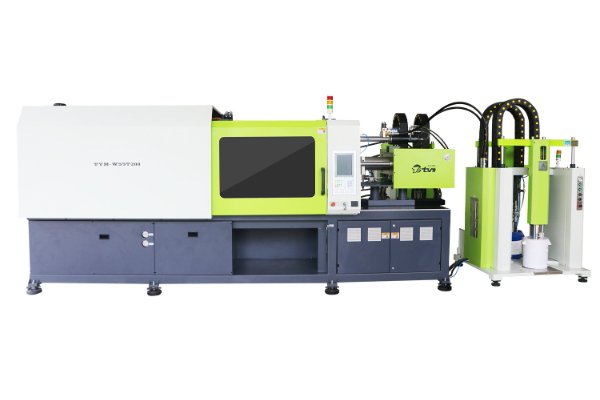
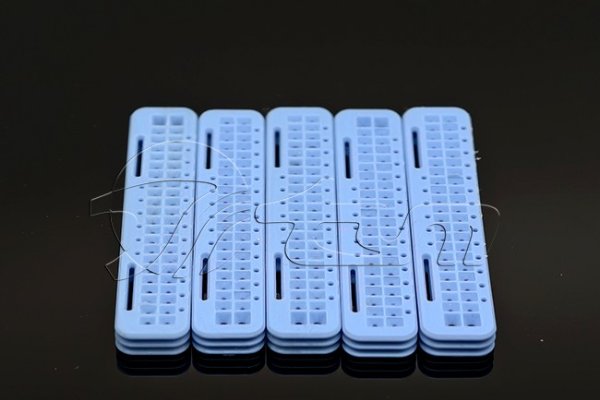
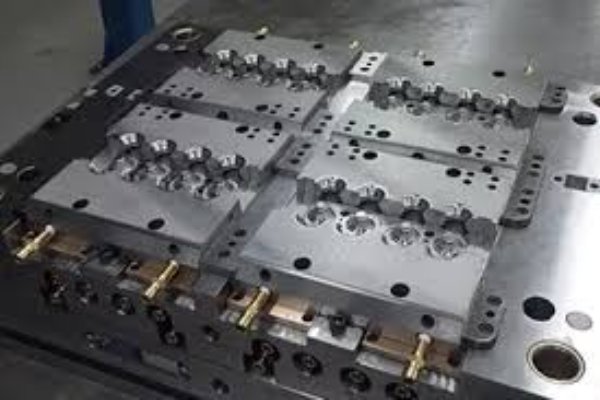
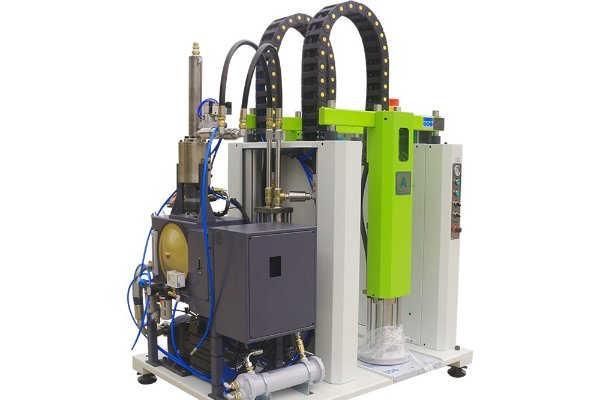
Automatic vs Semi-Automatic Silicone Molding Lines
A fully automatic silicone molding line handles LSR injection, demolding, and inspection with no operator per cycle, maximizing output and consistency; a semi-automatic line keeps a human in the loop for loading or part removal, lowering upfront cost. The right choice depends on your annual volume, part complexity, labor cost, and quality requirements.
This guide is for production and procurement decision-makers sizing a new LSR line—comparing the two configurations across throughput, quality, cost, and payback so you can match the investment to real demand.
What Is the Core Difference Between the Two?
The difference is who—or what—handles the part between shots. In a semi-automatic line, an operator loads inserts and/or removes finished parts while the machine controls injection and cure. In a fully automatic line, robots, brushes, air knives, or vision systems remove parts and the process runs unattended for long stretches.
Feature | Semi-automatic | Fully automatic |
Part removal | Operator or simple ejection | Robot / air / brush, automated |
Inserts loading | Manual | Robotic pick-and-place |
Quality inspection | Manual / sampling | Inline vision, 100% possible |
Operators per machine | ~1 | ~0.2–0.5 (supervision) |
Typical uptime | Lower | Higher, near lights-out |
Upfront cost | Lower | Higher |
How Do Output and Cycle Time Compare?
Fully automatic lines deliver higher effective output because they remove operator-dependent delays and run consistently across shifts. The injection and cure time for a given part is similar on both lines; the gap comes from handling time, consistency, and the ability to run multiple shifts unattended.
For a representative small LSR part with a 30–45 second cure, a semi-automatic cell might realize a longer effective cycle due to manual removal and rest breaks, while an automatic cell holds the theoretical cycle around the clock. Over a year, that difference compounds into meaningfully higher units per machine.
Metric (illustrative small part) | Semi-automatic | Fully automatic |
Theoretical cycle time | 30–45 s | 30–45 s |
Effective cycle (with handling) | 45–70 s | 32–48 s |
Shifts practical | 1–2 | 2–3 (near lights-out) |
Scrap rate | Higher variance | Lower, more stable |
Which Line Gives Better Quality and Consistency?
Fully automatic lines produce more consistent parts because they remove human variability from handling and enable 100% inline inspection. Automated demolding avoids finger contamination and inconsistent part handling, which matters for medical and food-contact silicone. Inline vision can reject flash, short shots, or bubbles in real time rather than at a later sampling step.
Semi-automatic lines can still hit high quality, but consistency depends on operator skill and discipline, and inspection is usually sampling-based rather than 100%.
What Does Each Line Cost—and When Does Automation Pay Back?
Automation pays back fastest when labor is expensive, volume is high, and quality demands are strict. The upfront premium for robots, cold-runner systems, and vision is offset by fewer operators, higher uptime, and lower scrap.
A simple way to estimate payback: multiply the labor saved per year (operators removed × loaded labor cost) plus scrap reduction and added output margin, then divide the automation premium by that annual saving. High-volume medical or automotive programs often reach payback within one to two years; low-volume or high-mix work may never justify full automation.
Key cost drivers to weigh:
• Labor rate and headcount removed per shift.
• Annual volume and number of shifts.
• Scrap and rework reduction from stable, contact-free handling.
• Changeover frequency—high-mix work erodes automation gains.
• Floor space and energy—servo-driven machines cut energy per part.
When Is Semi-Automatic the Smarter Choice?
Semi-automatic is the better fit for lower volumes, frequent part changes, prototypes, and tight capital budgets. If you run many short jobs, the setup time and rigidity of full automation work against you, and a skilled operator provides flexibility a robot cell cannot match cheaply.
Choose semi-automatic when annual volumes are modest, the product mix changes often, capital is limited, or you are validating a new part before committing to a high-cavitation automated tool.
How Does Industry 4.0 Fit In?
Modern automatic lines add data and connectivity on top of hardware automation. Servo-driven LSR machines with process monitoring log shot-by-shot parameters, feed MES/SCADA systems, and support predictive maintenance and traceability—valuable for regulated medical and automotive production where every part must be documented.
TYM builds both configurations and can scale a cell from semi-automatic to fully automatic with cold-runner systems, robotic demolding, vision inspection, and factory data integration as volumes grow.
FAQs
Q: Is a fully automatic silicone molding line always better?
No. Fully automatic lines win on output, consistency, and per-part labor at high volume, but they cost more upfront and are less flexible for frequent changeovers. For low volumes, prototypes, or high-mix production, a semi-automatic line usually offers better return on capital and more flexibility.
Q: How many operators does an automatic LSR line need?
A fully automatic line typically needs only supervision—often one technician overseeing several machines, roughly 0.2–0.5 operators per machine. A semi-automatic line generally needs about one operator per machine for loading and unloading, which is the main labor difference driving automation payback.
Q: Can a semi-automatic line be upgraded to automatic later?
Often yes. A machine bought with a cold-runner mold and automation-ready controls can add robotic demolding, part conveyors, and vision inspection later. Planning for this upgrade path at purchase—specifying the right interfaces and mold design—avoids replacing the whole cell when volume grows.
Q: What is the typical payback period for automating a silicone line?
It varies with labor cost and volume, but high-volume medical and automotive programs commonly reach payback within one to two years through reduced labor, lower scrap, and higher uptime. Low-volume or high-mix operations may see much longer payback, which is why volume is the key qualifier.
Q: Does automation improve part quality or just speed?
Both. Beyond throughput, automation removes human handling variability, prevents finger contamination on medical and food-contact parts, and enables 100% inline inspection instead of sampling. For regulated products, contact-free demolding and full data traceability are often as important as the speed gain.