
Recent Posts
-
![Meet TYM at K 2025 -The World’ s No.1 Trade Fair for Plastics and Rubber]() Meet TYM at K 2025 -The World’ s No.1 Trade Fair for Plastics and Rubber
Meet TYM at K 2025 -The World’ s No.1 Trade Fair for Plastics and RubberWelcome to the World’s No.1 Trade Fair for Plastics and Rubber -K 2025, taking place from October 8–15, 2025 at Messe Düsseldorf, Germany. As a professional LSR injection molding machine, mold, and robot solution provider, TYM Technology Co., Ltd. is proud to present our latest innovations at Booth 16E77.
09/23/2025
-
![ISO 9001, CE, CCC: What These Certifications Actually Mean for Your Equipment Purchase]() ISO 9001, CE, CCC: What These Certifications Actually Mean for Your Equipment Purchase
ISO 9001, CE, CCC: What These Certifications Actually Mean for Your Equipment PurchaseWhen you're evaluating LSR injection molding machines from an overseas supplier, certification logos on a company website can start to blur together. ISO 9001, CE, CCC — they all sound reassuring, but they don't all mean the same thing, and they don't all matter for the same reasons. Understanding what each certification actually covers will help you ask better questions during due diligence and avoid assuming a certificate guarantees something it doesn't.
07/17/2026
-
![Turnkey LSR Injection Molding Solutions]() Turnkey LSR Injection Molding Solutions
Turnkey LSR Injection Molding SolutionsLaunching a liquid silicone rubber (LSR) injection molding operation involves far more than simply purchasing a machine. From material selection and mold design to automation integration and staff training, the journey from concept to full-scale production presents numerous challenges—each with the potential to delay your time-to-market and inflate your budget.
07/14/2026
-
![Industrial Silicone Seals & Waterproof Parts: LSR Guide]() Industrial Silicone Seals & Waterproof Parts: LSR Guide
Industrial Silicone Seals & Waterproof Parts: LSR GuideThis guide helps product and sourcing engineers who need reliable industrial sealing components-gaskets, O-rings, grommets, and enclosure seals-understand why LSR injection molding is the preferred process for waterproof parts at volume, and how to specify them.
07/10/2026
-
![LSR Prototype to Production: Timeline & Process]() LSR Prototype to Production: Timeline & Process
LSR Prototype to Production: Timeline & ProcessA typical liquid silicone rubber (LSR) part moves from prototype to mass production in about 10-18 weeks, spanning design/DFM, prototyping, production mold fabrication, T1 sampling and validation, and pilot-to-ramp - with mold build and validation being the longest stages.
07/07/2026
-
![LSR Injection Molding Machine Parameters Explained]() LSR Injection Molding Machine Parameters Explained
LSR Injection Molding Machine Parameters ExplainedAn LSR injection molding machine spec sheet lists dozens of numbers, but only a handful decide whether your silicone parts cure fully, stay flash-free and cost little to run. This 2026 guide explains the parameters that matter most, so engineers and buyers can compare machines on the specs that actually affect part quality, not marketing figures.
07/02/2026
-
![Automatic vs Semi-Automatic Silicone Molding Lines]() Automatic vs Semi-Automatic Silicone Molding Lines
Automatic vs Semi-Automatic Silicone Molding LinesThis guide is for production and procurement decision-makers sizing a new LSR line—comparing the two configurations across throughput, quality, cost, and payback so you can match the investment to real demand.
07/01/2026
-
![LSR Cold Runner Systems: Cut Waste & Cost]() LSR Cold Runner Systems: Cut Waste & Cost
LSR Cold Runner Systems: Cut Waste & CostLSR cold runner system is the single fastest way to cut material waste and labor out of liquid silicone rubber molding. By keeping the silicone liquid until it reaches the cavity, it eliminates cured runners and trimming entirely. This guide helps process engineers and buyers decide when a cold runner pays for itself.
06/30/2026
-
![How to Select LSR Injection Molding Machine Tonnage]() How to Select LSR Injection Molding Machine Tonnage
How to Select LSR Injection Molding Machine TonnageChoosing the right clamping force is the single most consequential spec decision when buying a liquid silicone rubber (LSR) injection molding machine. Pick too little and you fight flash on every shot; pick too much and you pay for energy and floor space you never use.
06/29/2026
-
![Liquid Silicone Rubber Market 2026: Size, Growth & Demand Drivers]() Liquid Silicone Rubber Market 2026: Size, Growth & Demand Drivers
Liquid Silicone Rubber Market 2026: Size, Growth & Demand DriversThe global liquid silicone rubber (LSR) market is valued at roughly USD 3.4-3.8 billion in 2026 and growing about 7-9% annually, led by medical-grade demand (~44% of revenue) and rising EV production. Asia-Pacific dominates manufacturing capacity.
06/26/2026




Customized LSR Injection Molding Machines: How Personalized Solutions Improve Production Efficiency
As the global silicone manufacturing industry continues moving toward automation and high-precision production, manufacturers are increasingly demanding injection molding equipment tailored to specific products, industries, and production environments. Standardized equipment can no longer fully satisfy the growing complexity of medical silicone parts, automotive sealing systems, wearable devices, and multi-material overmolding applications.
Customized Liquid Silicone Rubber (LSR) injection molding machines are becoming an important solution for improving manufacturing efficiency, reducing production defects, and supporting large-scale intelligent production.
Why Standard LSR Injection Machines Are No Longer Enough
Traditional universal injection molding machines are suitable for general-purpose production, but modern silicone manufacturing increasingly requires more specialized process control.
Medical silicone products may require ultra-clean molding environments and high repeatability. Automotive silicone parts often involve complex sealing geometries and insert overmolding structures. Consumer electronics products may demand multi-material integration and extremely tight dimensional tolerance.
These differences mean that machine configuration must increasingly adapt to actual product requirements instead of relying on fixed production structures.
Customized Structures Improve Production Stability
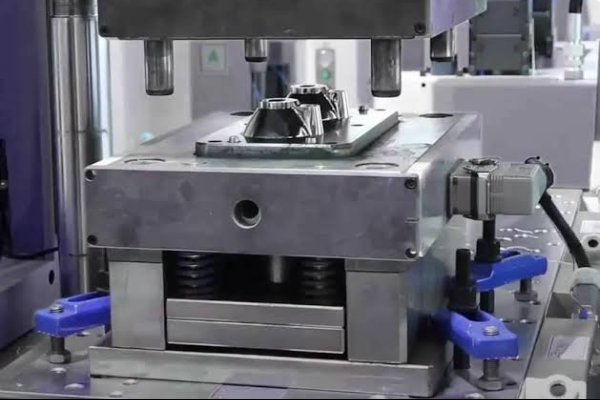
Customized machines can integrate optimized injection units, servo systems, temperature control structures, and nozzle configurations specifically designed for particular silicone products.
This significantly improves production repeatability and reduces defect rates during long-term operation.
Modern vertical LSR molding systems are also increasingly used for insert overmolding applications because they simplify insert positioning and improve operational safety.
Automation Is Reshaping Silicone Manufacturing
Modern customized LSR molding systems increasingly integrate automated demolding, robotic product pickup, visual inspection systems, and intelligent process monitoring technologies.
Instead of relying on manual production adjustments, manufacturers can achieve more stable and continuous operation through automated production logic.
This is especially important for industries such as medical manufacturing and automotive production where consistency and traceability are critical.
Industry-Specific Customization Trends
Different industries now require very different machine structures.
Medical silicone production increasingly requires cleanroom-compatible molding systems with stable material dosing and precision temperature control.
Automotive manufacturers often require machines optimized for wire harness seals, high-voltage cable accessories, and complex overmolding components.
Consumer electronics industries are focusing more on micro silicone molding, wearable product manufacturing, and multi-material integration.
FAQs
Q1:Why are customized LSR injection molding machines important?
A:Customized machines improve process stability, automation capability, and product consistency according to actual production requirements.
Q2:What industries require customized LSR equipment?
A:Medical, automotive, consumer electronics, labor protection, and baby care industries commonly require customized silicone molding systems.
Q3:How does automation improve silicone manufacturing?
A:Automation reduces labor dependency, improves consistency, lowers contamination risks, and supports continuous large-scale production.
Conclusion
Customized LSR injection molding machines are becoming increasingly important as silicone manufacturing moves toward intelligent automation and precision production. Manufacturers now require equipment capable of adapting to specific products, production environments, and long-term operational goals.