
Recent Posts
-
![Meet TYM at K 2025 -The World’ s No.1 Trade Fair for Plastics and Rubber]() Meet TYM at K 2025 -The World’ s No.1 Trade Fair for Plastics and Rubber
Meet TYM at K 2025 -The World’ s No.1 Trade Fair for Plastics and RubberWelcome to the World’s No.1 Trade Fair for Plastics and Rubber -K 2025, taking place from October 8–15, 2025 at Messe Düsseldorf, Germany. As a professional LSR injection molding machine, mold, and robot solution provider, TYM Technology Co., Ltd. is proud to present our latest innovations at Booth 16E77.
09/23/2025
-
![LSR Prototype to Production: Timeline & Process]() LSR Prototype to Production: Timeline & Process
LSR Prototype to Production: Timeline & ProcessA typical liquid silicone rubber (LSR) part moves from prototype to mass production in about 10-18 weeks, spanning design/DFM, prototyping, production mold fabrication, T1 sampling and validation, and pilot-to-ramp - with mold build and validation being the longest stages.
07/07/2026
-
![LSR Injection Molding Machine Parameters Explained]() LSR Injection Molding Machine Parameters Explained
LSR Injection Molding Machine Parameters ExplainedAn LSR injection molding machine spec sheet lists dozens of numbers, but only a handful decide whether your silicone parts cure fully, stay flash-free and cost little to run. This 2026 guide explains the parameters that matter most, so engineers and buyers can compare machines on the specs that actually affect part quality, not marketing figures.
07/02/2026
-
![Automatic vs Semi-Automatic Silicone Molding Lines]() Automatic vs Semi-Automatic Silicone Molding Lines
Automatic vs Semi-Automatic Silicone Molding LinesThis guide is for production and procurement decision-makers sizing a new LSR line—comparing the two configurations across throughput, quality, cost, and payback so you can match the investment to real demand.
07/01/2026
-
![LSR Cold Runner Systems: Cut Waste & Cost]() LSR Cold Runner Systems: Cut Waste & Cost
LSR Cold Runner Systems: Cut Waste & CostLSR cold runner system is the single fastest way to cut material waste and labor out of liquid silicone rubber molding. By keeping the silicone liquid until it reaches the cavity, it eliminates cured runners and trimming entirely. This guide helps process engineers and buyers decide when a cold runner pays for itself.
06/30/2026
-
![How to Select LSR Injection Molding Machine Tonnage]() How to Select LSR Injection Molding Machine Tonnage
How to Select LSR Injection Molding Machine TonnageChoosing the right clamping force is the single most consequential spec decision when buying a liquid silicone rubber (LSR) injection molding machine. Pick too little and you fight flash on every shot; pick too much and you pay for energy and floor space you never use.
06/29/2026
-
![Liquid Silicone Rubber Market 2026: Size, Growth & Demand Drivers]() Liquid Silicone Rubber Market 2026: Size, Growth & Demand Drivers
Liquid Silicone Rubber Market 2026: Size, Growth & Demand DriversThe global liquid silicone rubber (LSR) market is valued at roughly USD 3.4-3.8 billion in 2026 and growing about 7-9% annually, led by medical-grade demand (~44% of revenue) and rising EV production. Asia-Pacific dominates manufacturing capacity.
06/26/2026
-
![Self-Bonding LSR: How Self-Adhesive Liquid Silicone Simplifies Multi-Material Overmolding]() Self-Bonding LSR: How Self-Adhesive Liquid Silicone Simplifies Multi-Material Overmolding
Self-Bonding LSR: How Self-Adhesive Liquid Silicone Simplifies Multi-Material OvermoldingIf you manufacture multi-material silicone parts, the bonding step is often the hidden bottleneck. Traditional liquid silicone rubber (LSR) overmolding relies on a separately applied primer to make the silicone stick to a plastic or metal substrate.
06/18/2026
-
![Smart Automation in Silicone Manufacturing: Improving Consistency and Reducing Labor Costs]() Smart Automation in Silicone Manufacturing: Improving Consistency and Reducing Labor Costs
Smart Automation in Silicone Manufacturing: Improving Consistency and Reducing Labor CostsLabor shortages, rising wage costs, and increasing quality expectations are pushing silicone product manufacturers toward greater automation. For liquid silicone rubber (LSR) production specifically, automation is not just about reducing headcount — it directly impacts part consistency, contamination control, and overall production efficiency.
06/12/2026
-
![Shot Size Accuracy in LSR Molding: The Hidden Factor Behind Product Quality]() Shot Size Accuracy in LSR Molding: The Hidden Factor Behind Product Quality
Shot Size Accuracy in LSR Molding: The Hidden Factor Behind Product QualityPrecision is the cornerstone of liquid silicone rubber manufacturing. Yet many manufacturers overlook one critical parameter that determines product consistency: shot size accuracy.
06/10/2026



LSR Prototype to Production: Timeline & Process
What are the stages from LSR prototype to mass production?
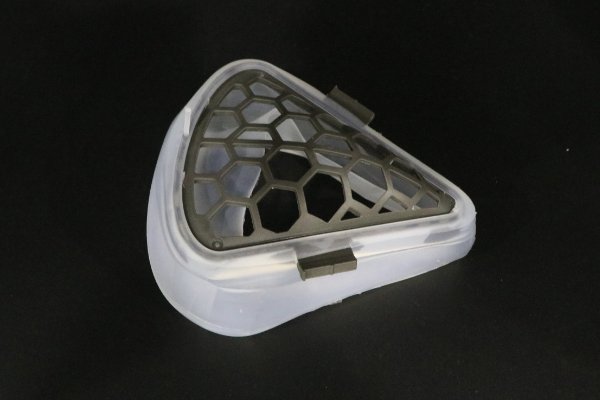
An LSR program has five core stages: design and DFM review, prototyping, production tooling, sampling and validation, then pilot run and ramp-up. Each stage has a clear deliverable and a gate that must pass before the next begins. Skipping a gate to save time almost always costs more time later in rework.
Stage | Typical duration | Key deliverable / gate |
1. Design + DFM | 1-2 weeks | Design for manufacturability report; part & material sign-off |
2. Prototype | 2-3 weeks | 3D-printed or soft-tool silicone samples for form/fit |
3. Production mold build | 4-6 weeks | Steel LSR mold with cold runner and venting |
4. T1 sampling + validation | 2-4 weeks | First-article parts, dimensional & functional approval |
5. Pilot + ramp | 1-3 weeks | Small pilot batch, then full mass production |
Total elapsed time is usually 10-18 weeks. Simple industrial parts with a single-cavity tool can hit the lower end; multi-cavity medical or two-shot programs with full validation reach the upper end or beyond.
How long does LSR tooling take, and why is it the critical path?
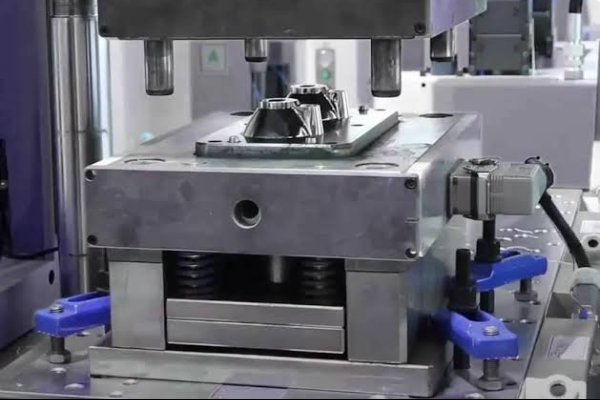
Production LSR tooling normally takes 4-6 weeks and is the single longest hard-lead item, so it defines the critical path. LSR molds are precision tools: they need tight parting-line fits to control flash on a low-viscosity material, micro-vents or vacuum venting to prevent trapped-air voids, and often a cold-runner (cold-deck) system to eliminate cured sprue waste. Hardened steels such as S136 (for corrosion resistance and polish) or 718H are common, and heat treatment plus fine finishing add days.
Because the mold is on the critical path, the fastest way to protect a launch date is to lock the design early. Every geometry change after steel is cut risks re-machining and re-sampling. TYM runs a DFM review before cutting steel specifically to surface undercuts, wall-thickness, venting, and shrinkage issues (LSR shrinks about 2-4%) while changes are still cheap.
Do you always need a prototype before the production mold?
Not always, but a prototype de-risks expensive tooling and is strongly recommended for new geometries. Prototypes fall into three tiers, each with a different cost-speed trade-off. Choosing the right tier depends on how much design uncertainty remains and whether the material behavior itself needs testing.
Prototype method | Lead time | Best for |
3D-printed (SLA/DLP resin) | 2-5 days | Form and fit only; not true silicone properties |
Silicone 3D print / cast | 1-2 weeks | Feel, shore hardness, basic function checks |
Soft / aluminum bridge tool | 2-3 weeks | Real LSR material, low-volume validation before steel |
For medical, baby-care, or sealing parts where compression set, tear strength, or biocompatibility matter, a real-LSR bridge tool is worth the time because it validates the actual material, not just the shape.
What validation is required before mass production?
Validation confirms the tool and process make good parts repeatably, and its depth scales with the application. At minimum, T1 (first-article) parts are measured against drawings and function-tested. Regulated parts add formal process validation. Building this into the schedule from the start prevents last-minute launch slips.
· Dimensional / first-article inspection (FAI) against the drawing and GD&T.
· Functional testing: seal leak, button force, tear, compression set, adhesion for two-shot.
· Medical: ISO 10993 biocompatibility, USP Class VI, ISO 13485 documentation.
· Baby / food-contact: FDA 21 CFR 177.2600, LFGB, EN 14350 / EN 1400 as applicable.
· Automotive: PPAP and IATF 16949 process controls; often IMDS material data.
· Process validation (IQ/OQ/PQ) for regulated volumes to lock the parameter window.
How can buyers compress the LSR timeline safely?
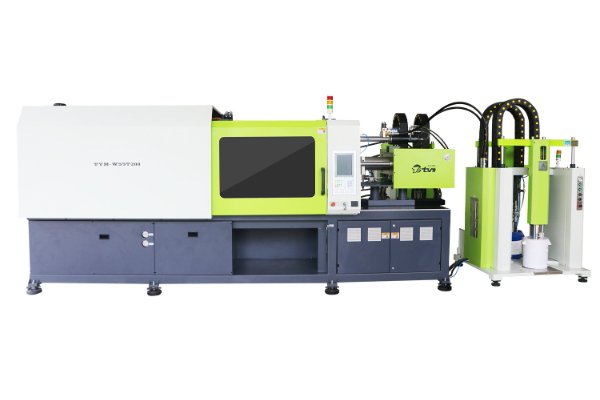
The safest accelerations remove risk, not steps. Freezing design early, running work in parallel, and choosing a supplier with in-house tooling and molding under one roof are the biggest levers. TYM shortens programs by keeping machine build, mold design, and automation integration in a single facility, so DFM feedback and tooling changes do not bounce between vendors.
1. Lock part design and material grade at the DFM gate before cutting steel.
2. Order long-lead steel while finalizing minor design details in parallel.
3. Use a bridge tool to start real-material validation while the production mold is built.
4. Define acceptance criteria and validation protocol up front so T1 approval is fast.
5. Choose a single-source partner for machine, mold, and automation to cut handoff delays.
FAQs
Q: How long does it take to go from LSR prototype to mass production?
A: Most LSR programs take about 10-18 weeks end to end: 1-2 weeks for design and DFM, 2-3 weeks for prototyping, 4-6 weeks to build the production mold, 2-4 weeks for sampling and validation, and 1-3 weeks for pilot and ramp. Multi-cavity, medical, or two-shot projects sit at the upper end.
Q: What is the lead time for an LSR injection mold?
A: A production LSR mold typically takes 4-6 weeks to build, making it the critical path. LSR tools need precise parting lines, micro-venting or vacuum venting, and often a cold-runner system, cut from hardened steels such as S136 or 718H. Locking the design before cutting steel is the best way to avoid re-machining delays.
Q: Do I need a prototype before building the production tool?
A: It is strongly recommended for any new geometry. A 3D-printed model (2-5 days) checks form and fit, while a soft or aluminum bridge tool (2-3 weeks) validates real LSR material before committing to steel. For medical, sealing, or baby-care parts, a real-material prototype de-risks compression set, tear strength, and biocompatibility.
Q: What causes delays in LSR projects?
A: The most common delays are late design changes after steel is cut, undefined acceptance criteria that stall T1 approval, and validation added as an afterthought. Splitting work across separate mold and molding vendors also adds handoff time. Freezing the design at the DFM gate and using a single-source partner prevent most slips.
Q: Can the LSR development timeline be shortened?
A: Yes, safely, by removing risk rather than skipping gates. Freeze design early, order long-lead steel in parallel with minor detailing, run real-material validation on a bridge tool while the production mold is built, and pre-agree the validation protocol. A supplier with in-house machine, mold, and automation shortens feedback loops further.
Conclusion
Getting an LSR part to mass production is a 10-18 week journey where tooling and validation set the pace. Buyers who lock design at the DFM gate, prototype the real material, and work with a single-source partner consistently hit their launch dates. TYM supports the full path - LSR machine, mold design and build, and automated production cells - so medical, automotive, baby-care, and industrial programs move from prototype to volume without vendor handoffs.