
Recent Posts
-
![Meet TYM at K 2025 -The World’ s No.1 Trade Fair for Plastics and Rubber]() Meet TYM at K 2025 -The World’ s No.1 Trade Fair for Plastics and Rubber
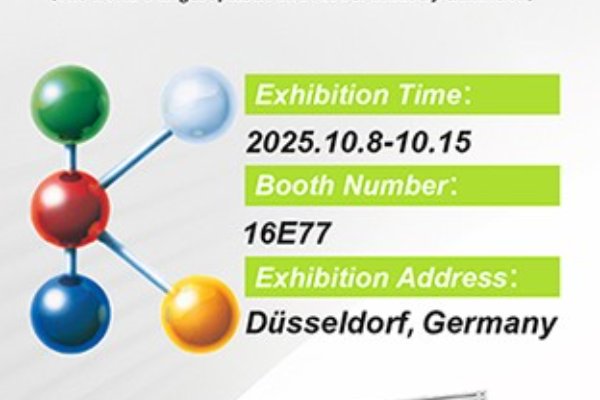
Meet TYM at K 2025 -The World’ s No.1 Trade Fair for Plastics and RubberWelcome to the World’s No.1 Trade Fair for Plastics and Rubber -K 2025, taking place from October 8–15, 2025 at Messe Düsseldorf, Germany. As a professional LSR injection molding machine, mold, and robot solution provider, TYM Technology Co., Ltd. is proud to present our latest innovations at Booth 16E77.
09/23/2025
-
![How to Choose an LSR OEM Manufacturing Partner: A Buyer's Checklist]() How to Choose an LSR OEM Manufacturing Partner: A Buyer's Checklist
How to Choose an LSR OEM Manufacturing Partner: A Buyer's ChecklistOutsourcing liquid silicone rubber production is as much a relationship decision as a technical one. A supplier can look strong on paper — certificates, equipment lists, a polished website — and still fall short once your product hits real production volume. Here's a practical checklist for evaluating an LSR OEM partner before you commit tooling and inventory to them.
07/29/2026
-
![LSR Molding Trends from CHINAPLAS and K Shows: What Manufacturers Should Watch For]() LSR Molding Trends from CHINAPLAS and K Shows: What Manufacturers Should Watch For
LSR Molding Trends from CHINAPLAS and K Shows: What Manufacturers Should Watch ForEvery year, the global plastics and rubber industry converges on two major stages — CHINAPLAS in Asia and the K show in Düsseldorf — to preview where injection molding technology is headed.
07/28/2026
-
![ISO 9001, CE, CCC: What These Certifications Actually Mean for Your Equipment Purchase]() ISO 9001, CE, CCC: What These Certifications Actually Mean for Your Equipment Purchase
ISO 9001, CE, CCC: What These Certifications Actually Mean for Your Equipment PurchaseWhen you're evaluating LSR injection molding machines from an overseas supplier, certification logos on a company website can start to blur together. ISO 9001, CE, CCC — they all sound reassuring, but they don't all mean the same thing, and they don't all matter for the same reasons. Understanding what each certification actually covers will help you ask better questions during due diligence and avoid assuming a certificate guarantees something it doesn't.
07/17/2026
-
![Turnkey LSR Injection Molding Solutions]() Turnkey LSR Injection Molding Solutions
Turnkey LSR Injection Molding SolutionsLaunching a liquid silicone rubber (LSR) injection molding operation involves far more than simply purchasing a machine. From material selection and mold design to automation integration and staff training, the journey from concept to full-scale production presents numerous challenges—each with the potential to delay your time-to-market and inflate your budget.
07/14/2026
-
![Industrial Silicone Seals & Waterproof Parts: LSR Guide]() Industrial Silicone Seals & Waterproof Parts: LSR Guide
Industrial Silicone Seals & Waterproof Parts: LSR GuideThis guide helps product and sourcing engineers who need reliable industrial sealing components-gaskets, O-rings, grommets, and enclosure seals-understand why LSR injection molding is the preferred process for waterproof parts at volume, and how to specify them.
07/10/2026
-
![LSR Prototype to Production: Timeline & Process]() LSR Prototype to Production: Timeline & Process
LSR Prototype to Production: Timeline & ProcessA typical liquid silicone rubber (LSR) part moves from prototype to mass production in about 10-18 weeks, spanning design/DFM, prototyping, production mold fabrication, T1 sampling and validation, and pilot-to-ramp - with mold build and validation being the longest stages.
07/07/2026
-
![LSR Injection Molding Machine Parameters Explained]() LSR Injection Molding Machine Parameters Explained
LSR Injection Molding Machine Parameters ExplainedAn LSR injection molding machine spec sheet lists dozens of numbers, but only a handful decide whether your silicone parts cure fully, stay flash-free and cost little to run. This 2026 guide explains the parameters that matter most, so engineers and buyers can compare machines on the specs that actually affect part quality, not marketing figures.
07/02/2026
-
![Automatic vs Semi-Automatic Silicone Molding Lines]() Automatic vs Semi-Automatic Silicone Molding Lines
Automatic vs Semi-Automatic Silicone Molding LinesThis guide is for production and procurement decision-makers sizing a new LSR line—comparing the two configurations across throughput, quality, cost, and payback so you can match the investment to real demand.
07/01/2026
-
![LSR Cold Runner Systems: Cut Waste & Cost]() LSR Cold Runner Systems: Cut Waste & Cost
LSR Cold Runner Systems: Cut Waste & CostLSR cold runner system is the single fastest way to cut material waste and labor out of liquid silicone rubber molding. By keeping the silicone liquid until it reaches the cavity, it eliminates cured runners and trimming entirely. This guide helps process engineers and buyers decide when a cold runner pays for itself.
06/30/2026





How to Choose an LSR OEM Manufacturing Partner: A Buyer's Checklist
1. Do They Design Molds In-House, or Only Run Them?
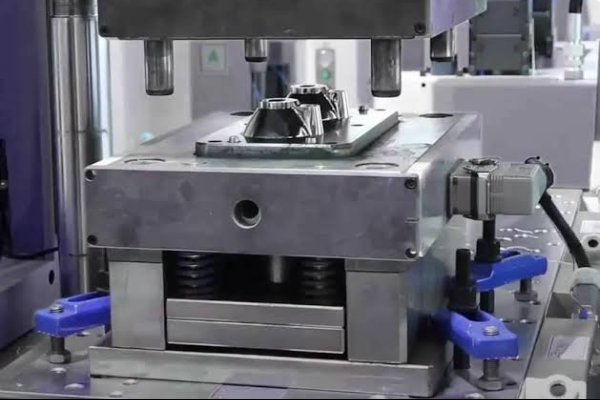
There's a meaningful difference between a factory that molds parts on tooling it built itself and one that only operates molds designed elsewhere. In-house mold design means feedback from tryout — a gate that needs repositioning, a cavity that fills unevenly — can be resolved directly, without waiting on a third-party toolmaker's schedule. Ask to see examples of molds they've engineered from a customer's 3D model through to production, not just machines they operate.
2. What's Their Actual Production Capacity, Not Just Their Machine Count?
A supplier listing "20+ LSR injection machines" tells you less than knowing how many of those machines are actually available for new business versus already committed to existing customers. Ask directly about current utilization and realistic lead time for a program at your expected monthly volume — not just theoretical capacity.
3. Can They Support Your Specific Certification Requirements?
If your end product needs FDA-relevant material handling, IATF 16949-aligned automotive quality systems, or ISO 9001 documentation, confirm the OEM's certifications cover your part category specifically, not just a general company-wide badge. Ask for the actual certificate and its scope, and check whether it's current.
4. How Do They Handle Multi-Material and Multi-Color Parts?
If your product roadmap includes two-shot, overmolded, or multi-color parts, ask specifically how the OEM handles that process today — not whether they theoretically could. A supplier with working double-color and double-material machines already running production parts is a materially lower-risk choice than one describing the capability in future tense.
5. What Does Their Quality Documentation Actually Look Like?
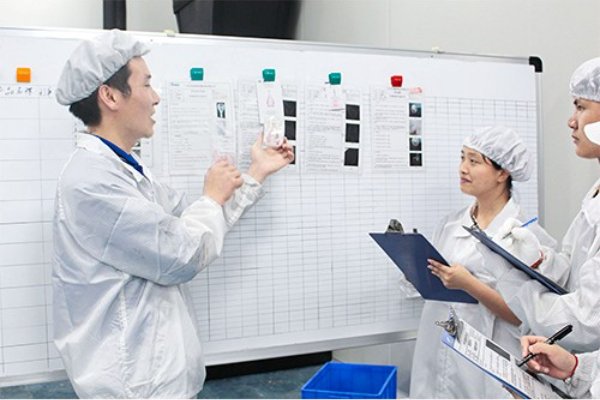
Ask to see a sample inspection report, a dimensional capability study, or a first-article inspection package from a comparable part — not just a description of their quality process. The difference between a supplier who talks about Cpk and one who can hand you an actual Cpk report from a similar production run is the difference that shows up (or doesn't) six months into your program.
6. How Do They Communicate During Problems, Not Just During Sales?
Every OEM relationship eventually hits a hiccup — a shipment delay, a dimensional drift, a material lot issue. The sales process rarely reveals how a supplier behaves under that kind of pressure. Ask for a reference customer you can actually contact, and ask that reference specifically about how the supplier communicated during a past problem, not just about overall satisfaction.
7. Do They Own the Full Process, or Coordinate Across Sub-Vendors?
An OEM that handles mold design, molding, and automation internally can usually diagnose and fix a defect faster than one coordinating between its own molding floor and an external toolmaker or automation integrator. This matters especially in the first few months of a new part launch, when process tuning is still happening.
Putting It Together
None of these factors alone disqualifies a supplier — a smaller shop might have excellent quality discipline, and a large factory might still be building out its multi-material capability. But going through this checklist before signing an agreement, rather than discovering the answers during your first production run, is what separates OEM partnerships that scale smoothly from ones that require a painful supplier switch a year in.
Evaluating LSR OEM partners for an upcoming product launch? Ask us for reference customers, sample quality documentation, and current production capacity before you commit.