
Recent Posts
-
![Meet TYM at K 2025 -The World’ s No.1 Trade Fair for Plastics and Rubber]() Meet TYM at K 2025 -The World’ s No.1 Trade Fair for Plastics and Rubber
Meet TYM at K 2025 -The World’ s No.1 Trade Fair for Plastics and RubberWelcome to the World’s No.1 Trade Fair for Plastics and Rubber -K 2025, taking place from October 8–15, 2025 at Messe Düsseldorf, Germany. As a professional LSR injection molding machine, mold, and robot solution provider, TYM Technology Co., Ltd. is proud to present our latest innovations at Booth 16E77.
09/23/2025
-
![ISO 9001, CE, CCC: What These Certifications Actually Mean for Your Equipment Purchase]() ISO 9001, CE, CCC: What These Certifications Actually Mean for Your Equipment Purchase
ISO 9001, CE, CCC: What These Certifications Actually Mean for Your Equipment PurchaseWhen you're evaluating LSR injection molding machines from an overseas supplier, certification logos on a company website can start to blur together. ISO 9001, CE, CCC — they all sound reassuring, but they don't all mean the same thing, and they don't all matter for the same reasons. Understanding what each certification actually covers will help you ask better questions during due diligence and avoid assuming a certificate guarantees something it doesn't.
07/17/2026
-
![Turnkey LSR Injection Molding Solutions]() Turnkey LSR Injection Molding Solutions
Turnkey LSR Injection Molding SolutionsLaunching a liquid silicone rubber (LSR) injection molding operation involves far more than simply purchasing a machine. From material selection and mold design to automation integration and staff training, the journey from concept to full-scale production presents numerous challenges—each with the potential to delay your time-to-market and inflate your budget.
07/14/2026
-
![Industrial Silicone Seals & Waterproof Parts: LSR Guide]() Industrial Silicone Seals & Waterproof Parts: LSR Guide
Industrial Silicone Seals & Waterproof Parts: LSR GuideThis guide helps product and sourcing engineers who need reliable industrial sealing components-gaskets, O-rings, grommets, and enclosure seals-understand why LSR injection molding is the preferred process for waterproof parts at volume, and how to specify them.
07/10/2026
-
![LSR Prototype to Production: Timeline & Process]() LSR Prototype to Production: Timeline & Process
LSR Prototype to Production: Timeline & ProcessA typical liquid silicone rubber (LSR) part moves from prototype to mass production in about 10-18 weeks, spanning design/DFM, prototyping, production mold fabrication, T1 sampling and validation, and pilot-to-ramp - with mold build and validation being the longest stages.
07/07/2026
-
![LSR Injection Molding Machine Parameters Explained]() LSR Injection Molding Machine Parameters Explained
LSR Injection Molding Machine Parameters ExplainedAn LSR injection molding machine spec sheet lists dozens of numbers, but only a handful decide whether your silicone parts cure fully, stay flash-free and cost little to run. This 2026 guide explains the parameters that matter most, so engineers and buyers can compare machines on the specs that actually affect part quality, not marketing figures.
07/02/2026
-
![Automatic vs Semi-Automatic Silicone Molding Lines]() Automatic vs Semi-Automatic Silicone Molding Lines
Automatic vs Semi-Automatic Silicone Molding LinesThis guide is for production and procurement decision-makers sizing a new LSR line—comparing the two configurations across throughput, quality, cost, and payback so you can match the investment to real demand.
07/01/2026
-
![LSR Cold Runner Systems: Cut Waste & Cost]() LSR Cold Runner Systems: Cut Waste & Cost
LSR Cold Runner Systems: Cut Waste & CostLSR cold runner system is the single fastest way to cut material waste and labor out of liquid silicone rubber molding. By keeping the silicone liquid until it reaches the cavity, it eliminates cured runners and trimming entirely. This guide helps process engineers and buyers decide when a cold runner pays for itself.
06/30/2026
-
![How to Select LSR Injection Molding Machine Tonnage]() How to Select LSR Injection Molding Machine Tonnage
How to Select LSR Injection Molding Machine TonnageChoosing the right clamping force is the single most consequential spec decision when buying a liquid silicone rubber (LSR) injection molding machine. Pick too little and you fight flash on every shot; pick too much and you pay for energy and floor space you never use.
06/29/2026
-
![Liquid Silicone Rubber Market 2026: Size, Growth & Demand Drivers]() Liquid Silicone Rubber Market 2026: Size, Growth & Demand Drivers
Liquid Silicone Rubber Market 2026: Size, Growth & Demand DriversThe global liquid silicone rubber (LSR) market is valued at roughly USD 3.4-3.8 billion in 2026 and growing about 7-9% annually, led by medical-grade demand (~44% of revenue) and rising EV production. Asia-Pacific dominates manufacturing capacity.
06/26/2026




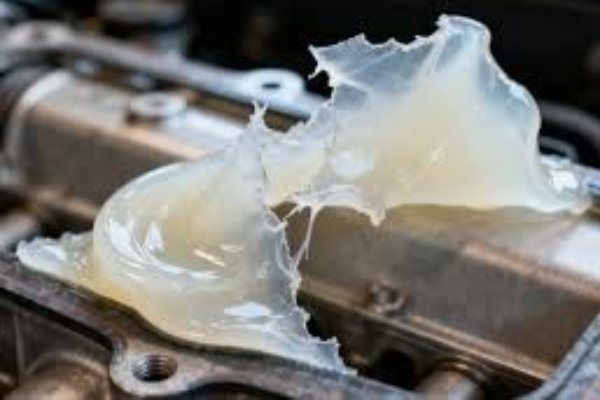

How to Choose the Best Injection Molding Machine for Baby Bottle LSR and PPSU Materials
The global baby bottle market, projected to exceed USD 4.5 billion by 2026, is no longer just about cute designs. It’s a battleground for material science, precision engineering, and parental trust. At the heart of this evolution are two dominant materials: Liquid Silicone Rubber (LSR) and Polyphenylsulfone (PPSU). Their superior safety, durability, and clarity have set a new standard. But the secret to unlocking their full potential lies not just in the material itself, but in the machine that shapes it. Here’s our insider’s guide, drawn from our daily work at TYM, on what truly matters when choosing an injection molding machine for these critical applications.
1. Speed & Precision: The Non-Negotiables for High-Volume Safety
In baby bottle production, especially for components like nipples (LSR) and bottle bodies (PPSU), consistency is safety. A single flaw in wall thickness or sealing surface can compromise the entire product.
The Data Point: Industry benchmarks show that for thin-walled PPSU bottles, cycle times need to be under 15 seconds to remain competitive, while LSR nipple molding demands injection speeds capable of filling intricate, micro-featured molds before the material begins to cure.
The TYM Perspective: This is where machine design is paramount. Our LSR and PPSU-capable machines, for instance, are engineered with optimized hydraulic systems that achieve injection speeds up to 100g/s. This isn't just a spec sheet number; it translates directly into flawless filling of complex nipple vent systems and uniform PPSU bottle walls, reducing stress points and potential failure zones.
Your Actionable Checklist:Demand Injection Speed Data: Ask for validated shot-to-shot consistency reports at the machine's maximum rated speed for your specific material grade.
Evaluate Clamping Rigidity: A high-rigidity lock structure, as we implement at TYM, is not optional. It prevents deflection during high-pressure injection, directly extending mold life and ensuring dimensional accuracy across millions of cycles. Ask for deflection measurements under full tonnage.
2. Material-Specific Engineering: One Machine Does NOT Fit All
Treating LSR and PPSU like standard plastics is the fastest route to product failure. Their processing requirements are diametrically opposed.
LSR Case Study: LSR is a cold-runner, heat-cured material. It requires precise temperature control of the material path (typically below 30°C) to prevent premature curing in the barrel, paired with a hot mold (often 150-200°C). Contamination from previous materials is catastrophic.
PPSU Case Study: PPSU is a high-temperature, hygroscopic engineering plastic. It requires a barrel capable of sustained temperatures above 350°C and a rigorously dry material handling system. Any moisture causes hydrolysis, leading to splay marks and weakened structural integrity.
The TYM Solution: We advocate for dedicated systems or machines with truly convertible, purgable platforms. Our LSR machines feature specialized, rapid screws designed for low-shear, gentle plastication to maintain LSR's viscosity, coupled with closed-loop fluid temperature control. For PPSU, we integrate high-temperature barrels and recommend integrated dehumidifying dryers as part of the complete equipment solution we provide.
Your Actionable Checklist:For LSR: Verify the presence of a cooled barrel/screw assembly and ask about the material changeover procedure. Inspect the design of the screw—it should be optimized for silicone, not adapted from a thermoplastic design.
For PPSU: Confirm the maximum barrel temperature rating and the integration point for auxiliary drying equipment. The hopper should be sealed or part of a closed-loop drying system.
3. The Total System View: Beyond the Machine Base
A molding machine is only as good as its peripherals. This is especially true for sensitive applications like baby products.
The Reality: Inconsistent material mixing (for LSR) or fluctuating drying (for PPSU) will scrap parts even on the world's best press. For LSR, the metering and mixing of the A/B components must be precise to within 0.5% to ensure perfect cure and physical properties.
TYM's Integrated Approach: We don't just sell a machine; we engineer a production cell. This includes LSR metering units with precision gear pumps, color paste pumps for clean, consistent coloring, and intelligent feeding systems that maintain perfect ratio control. For PPSU lines, we specify and integrate drying hoppers with dew point monitoring. Using high-quality components from renowned European and Japanese suppliers in these subsystems is non-negotiable for long-term stability.
Your Actionable Checklist:Audit the Entire Process Flow: Require the machine supplier to provide a layout for the complete cell, including material handling, mixing, molding, and part removal.
Focus on Control Integration: The peripherals should not be standalone islands. Ensure the main machine controller can monitor and alarm for deviations in mixer ratio, dryer dew point, or fluid temperatures.
4. Adaptability & Future-Proofing: The Trend is Customization
The baby bottle market trend is moving sharply towards customization—anti-colic systems with complex internal geometries, integrated smart temperature sensors, dual-material grips (combining PPSU with a soft-touch TPE or LSR), and ergonomic shapes.
Industry Insight: Brands like Philips Avent, Hegen, and comotomo continuously push design boundaries. Your molding equipment must be a partner in this innovation, not a limitation.
TYM's Capability: This is the core of our customized equipment design philosophy. Whether it's developing a micro-precision injection unit for tiny valve components, a LSR/PPSU two-shot molding machine for integrated soft-zone handles, or a vertical machine for insert-molded smart components, we build the solution around the part. Our expertise in mold design and manufacturing ensures the machine and tool are a perfectly harmonized system from day one.
Your Actionable Checklist:Discuss Your Roadmap: Share your next 3-5 year product development concepts with potential suppliers. Gauge their engineering team's ability to conceptualize solutions.
Request Case Studies: Ask for specific examples where they have built machines for similar innovative applications. A true partner will have a portfolio of challenges they've solved.
Final Thoughts from TYM
Choosing the right machine for LSR and PPSU baby bottles is ultimately a choice about risk management. It's about investing in precision, stability, and a true partnership to mitigate the immense risk of product recalls, brand damage, and most importantly, compromising child safety. The cheapest press often carries the highest hidden cost.
At Tianyuan Intelligent Manufacturing, we believe our role is to be the reliable, technological foundation upon which brands can build safer, more innovative products for the next generation. By focusing on the pillars of speed, material-specific engineering, system integration, and adaptability, you're not just buying a machine—you're securing your brand's future in the nursery.