
Recent Posts
-
![Meet TYM at K 2025 -The World’ s No.1 Trade Fair for Plastics and Rubber]() Meet TYM at K 2025 -The World’ s No.1 Trade Fair for Plastics and Rubber
Meet TYM at K 2025 -The World’ s No.1 Trade Fair for Plastics and RubberWelcome to the World’s No.1 Trade Fair for Plastics and Rubber -K 2025, taking place from October 8–15, 2025 at Messe Düsseldorf, Germany. As a professional LSR injection molding machine, mold, and robot solution provider, TYM Technology Co., Ltd. is proud to present our latest innovations at Booth 16E77.
09/23/2025
-
![Pure Electric Servo Feeding System vs. Traditional Pneumatic Feeding: Which One Actually Saves You Money?]() Pure Electric Servo Feeding System vs. Traditional Pneumatic Feeding: Which One Actually Saves You Money?
Pure Electric Servo Feeding System vs. Traditional Pneumatic Feeding: Which One Actually Saves You Money?If you run an LSR (Liquid Silicone Rubber) injection molding line, the feeding system is easy to overlook — until it starts costing you scrap rate, downtime, and inconsistent shot weights. Two technologies dominate the market today: pneumatic (air-driven) feeding systems and pure electric servo feeding systems. Here's an honest, practical comparison to help you decide which fits your production line.
07/31/2026
-
![How to Choose an LSR OEM Manufacturing Partner: A Buyer's Checklist]() How to Choose an LSR OEM Manufacturing Partner: A Buyer's Checklist
How to Choose an LSR OEM Manufacturing Partner: A Buyer's ChecklistOutsourcing liquid silicone rubber production is as much a relationship decision as a technical one. A supplier can look strong on paper — certificates, equipment lists, a polished website — and still fall short once your product hits real production volume. Here's a practical checklist for evaluating an LSR OEM partner before you commit tooling and inventory to them.
07/29/2026
-
![LSR Molding Trends from CHINAPLAS and K Shows: What Manufacturers Should Watch For]() LSR Molding Trends from CHINAPLAS and K Shows: What Manufacturers Should Watch For
LSR Molding Trends from CHINAPLAS and K Shows: What Manufacturers Should Watch ForEvery year, the global plastics and rubber industry converges on two major stages — CHINAPLAS in Asia and the K show in Düsseldorf — to preview where injection molding technology is headed.
07/28/2026
-
![ISO 9001, CE, CCC: What These Certifications Actually Mean for Your Equipment Purchase]() ISO 9001, CE, CCC: What These Certifications Actually Mean for Your Equipment Purchase
ISO 9001, CE, CCC: What These Certifications Actually Mean for Your Equipment PurchaseWhen you're evaluating LSR injection molding machines from an overseas supplier, certification logos on a company website can start to blur together. ISO 9001, CE, CCC — they all sound reassuring, but they don't all mean the same thing, and they don't all matter for the same reasons. Understanding what each certification actually covers will help you ask better questions during due diligence and avoid assuming a certificate guarantees something it doesn't.
07/17/2026
-
![Turnkey LSR Injection Molding Solutions]() Turnkey LSR Injection Molding Solutions
Turnkey LSR Injection Molding SolutionsLaunching a liquid silicone rubber (LSR) injection molding operation involves far more than simply purchasing a machine. From material selection and mold design to automation integration and staff training, the journey from concept to full-scale production presents numerous challenges—each with the potential to delay your time-to-market and inflate your budget.
07/14/2026
-
![Industrial Silicone Seals & Waterproof Parts: LSR Guide]() Industrial Silicone Seals & Waterproof Parts: LSR Guide
Industrial Silicone Seals & Waterproof Parts: LSR GuideThis guide helps product and sourcing engineers who need reliable industrial sealing components-gaskets, O-rings, grommets, and enclosure seals-understand why LSR injection molding is the preferred process for waterproof parts at volume, and how to specify them.
07/10/2026
-
![LSR Prototype to Production: Timeline & Process]() LSR Prototype to Production: Timeline & Process
LSR Prototype to Production: Timeline & ProcessA typical liquid silicone rubber (LSR) part moves from prototype to mass production in about 10-18 weeks, spanning design/DFM, prototyping, production mold fabrication, T1 sampling and validation, and pilot-to-ramp - with mold build and validation being the longest stages.
07/07/2026
-
![LSR Injection Molding Machine Parameters Explained]() LSR Injection Molding Machine Parameters Explained
LSR Injection Molding Machine Parameters ExplainedAn LSR injection molding machine spec sheet lists dozens of numbers, but only a handful decide whether your silicone parts cure fully, stay flash-free and cost little to run. This 2026 guide explains the parameters that matter most, so engineers and buyers can compare machines on the specs that actually affect part quality, not marketing figures.
07/02/2026
-
![Automatic vs Semi-Automatic Silicone Molding Lines]() Automatic vs Semi-Automatic Silicone Molding Lines
Automatic vs Semi-Automatic Silicone Molding LinesThis guide is for production and procurement decision-makers sizing a new LSR line—comparing the two configurations across throughput, quality, cost, and payback so you can match the investment to real demand.
07/01/2026






Pure Electric Servo Feeding System vs. Traditional Pneumatic Feeding: Which One Actually Saves You Money?
How Each System Works
Pneumatic feeding systems use compressed air to drive pistons that push Part A and Part B silicone components from the drums into the mixing and metering unit. They've been the industry standard for decades because they're simple, low-cost to install, and easy to maintain.
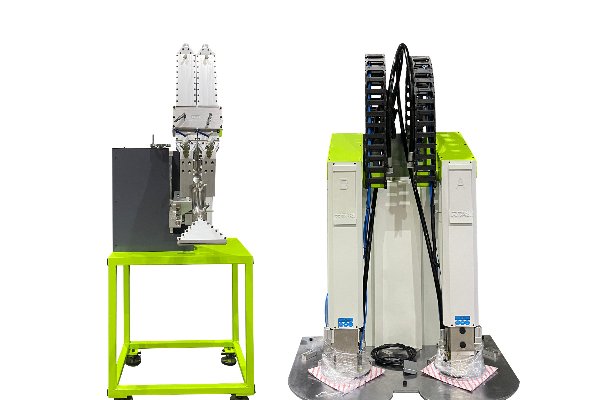
Pure electric servo feeding systems replace air-driven pistons with servo motors and precision ball screws. Every stroke is controlled digitally — speed, pressure, and position are monitored and adjusted in real time by the control system, rather than relying on air pressure that fluctuates with your factory's compressed air supply.
Where the Real Differences Show Up
1. Metering Accuracy
Pneumatic systems depend on stable air pressure to maintain a consistent A:B mixing ratio. In practice, most factories see pressure fluctuations throughout the day — especially when multiple machines share one air compressor. This shows up as small variations in shot weight and cure consistency.
Electric servo systems hold mixing ratio accuracy within a much tighter tolerance because the motor position is a closed-loop, digitally controlled value, not a function of ambient air pressure. For medical, infant care, and precision electronics parts where tolerance really matters, this difference is not cosmetic — it directly affects your reject rate.
2. Energy Consumption
Air compressors are expensive to run continuously, and a large portion of that energy is lost as heat and pressure drop in the piping. Electric servo systems only draw power during the actual feeding stroke, and many factories report meaningfully lower energy costs per shift after switching, particularly on lines running multiple shifts per day.
3. Maintenance and Long-Term Reliability
Pneumatic systems require ongoing maintenance of air filters, regulators, seals, and the air supply network itself — moisture in compressed air is a common cause of component wear. Electric servo systems have fewer wear parts in the feeding path itself, which tends to mean lower long-term maintenance costs, though the upfront investment is higher.
4. Response Speed and Control
Servo motors respond to control signals faster and more precisely than pneumatic actuators, which have to overcome air compressibility before motion even starts. For high-cycle, high-precision production — think automotive connector seals or multi-cavity medical part molds — this translates into more repeatable cycle times.
5. Noise and Factory Environment
Pneumatic systems are noisier, both from the compressor and from air exhaust at each cycle. Electric servo systems run significantly quieter, which matters if you're trying to meet stricter factory noise regulations in the EU or North America.
Which One Should You Choose?
| Factor | Pneumatic | Pure Electric Servo |
|---|---|---|
| Upfront cost | Lower | Higher |
| Mixing ratio accuracy | Good | Excellent |
| Energy efficiency | Standard | Higher |
| Maintenance | Air system upkeep | Lower long-term |
| Best for | General-purpose, cost-sensitive lines | Medical, infant care, automotive, high-precision parts |
If your product tolerances are forgiving and your priority is minimizing upfront capital cost, a well-maintained pneumatic system still does a solid job. But if you're producing medical devices, baby feeding products, or automotive sealing components where shot-to-shot consistency directly affects your certification and reject rate, the accuracy and long-term cost advantage of a pure electric servo feeding system usually pays for itself.
About TYM's Electric Servo Feeding Systems
TYM designs and manufactures pure electric servo feeding systems as part of our integrated LSR injection molding machine lines, built in-house alongside our horizontal, vertical, and double-color injection machines. Our systems are engineered to hold tight mixing ratios batch after batch, with the same ISO 9001, CE, and CCC certified quality standards applied across our full product range.
If you're evaluating your next LSR production line and want to compare feeding technologies for your specific product, our engineering team is happy to walk through the numbers with you based on your actual part specs and output targets.