
Recent Posts
-
![Meet TYM at K 2025 -The World’ s No.1 Trade Fair for Plastics and Rubber]() Meet TYM at K 2025 -The World’ s No.1 Trade Fair for Plastics and Rubber
Meet TYM at K 2025 -The World’ s No.1 Trade Fair for Plastics and RubberWelcome to the World’s No.1 Trade Fair for Plastics and Rubber -K 2025, taking place from October 8–15, 2025 at Messe Düsseldorf, Germany. As a professional LSR injection molding machine, mold, and robot solution provider, TYM Technology Co., Ltd. is proud to present our latest innovations at Booth 16E77.
09/23/2025
-
![ISO 9001, CE, CCC: What These Certifications Actually Mean for Your Equipment Purchase]() ISO 9001, CE, CCC: What These Certifications Actually Mean for Your Equipment Purchase
ISO 9001, CE, CCC: What These Certifications Actually Mean for Your Equipment PurchaseWhen you're evaluating LSR injection molding machines from an overseas supplier, certification logos on a company website can start to blur together. ISO 9001, CE, CCC — they all sound reassuring, but they don't all mean the same thing, and they don't all matter for the same reasons. Understanding what each certification actually covers will help you ask better questions during due diligence and avoid assuming a certificate guarantees something it doesn't.
07/17/2026
-
![Turnkey LSR Injection Molding Solutions]() Turnkey LSR Injection Molding Solutions
Turnkey LSR Injection Molding SolutionsLaunching a liquid silicone rubber (LSR) injection molding operation involves far more than simply purchasing a machine. From material selection and mold design to automation integration and staff training, the journey from concept to full-scale production presents numerous challenges—each with the potential to delay your time-to-market and inflate your budget.
07/14/2026
-
![Industrial Silicone Seals & Waterproof Parts: LSR Guide]() Industrial Silicone Seals & Waterproof Parts: LSR Guide
Industrial Silicone Seals & Waterproof Parts: LSR GuideThis guide helps product and sourcing engineers who need reliable industrial sealing components-gaskets, O-rings, grommets, and enclosure seals-understand why LSR injection molding is the preferred process for waterproof parts at volume, and how to specify them.
07/10/2026
-
![LSR Prototype to Production: Timeline & Process]() LSR Prototype to Production: Timeline & Process
LSR Prototype to Production: Timeline & ProcessA typical liquid silicone rubber (LSR) part moves from prototype to mass production in about 10-18 weeks, spanning design/DFM, prototyping, production mold fabrication, T1 sampling and validation, and pilot-to-ramp - with mold build and validation being the longest stages.
07/07/2026
-
![LSR Injection Molding Machine Parameters Explained]() LSR Injection Molding Machine Parameters Explained
LSR Injection Molding Machine Parameters ExplainedAn LSR injection molding machine spec sheet lists dozens of numbers, but only a handful decide whether your silicone parts cure fully, stay flash-free and cost little to run. This 2026 guide explains the parameters that matter most, so engineers and buyers can compare machines on the specs that actually affect part quality, not marketing figures.
07/02/2026
-
![Automatic vs Semi-Automatic Silicone Molding Lines]() Automatic vs Semi-Automatic Silicone Molding Lines
Automatic vs Semi-Automatic Silicone Molding LinesThis guide is for production and procurement decision-makers sizing a new LSR line—comparing the two configurations across throughput, quality, cost, and payback so you can match the investment to real demand.
07/01/2026
-
![LSR Cold Runner Systems: Cut Waste & Cost]() LSR Cold Runner Systems: Cut Waste & Cost
LSR Cold Runner Systems: Cut Waste & CostLSR cold runner system is the single fastest way to cut material waste and labor out of liquid silicone rubber molding. By keeping the silicone liquid until it reaches the cavity, it eliminates cured runners and trimming entirely. This guide helps process engineers and buyers decide when a cold runner pays for itself.
06/30/2026
-
![How to Select LSR Injection Molding Machine Tonnage]() How to Select LSR Injection Molding Machine Tonnage
How to Select LSR Injection Molding Machine TonnageChoosing the right clamping force is the single most consequential spec decision when buying a liquid silicone rubber (LSR) injection molding machine. Pick too little and you fight flash on every shot; pick too much and you pay for energy and floor space you never use.
06/29/2026
-
![Liquid Silicone Rubber Market 2026: Size, Growth & Demand Drivers]() Liquid Silicone Rubber Market 2026: Size, Growth & Demand Drivers
Liquid Silicone Rubber Market 2026: Size, Growth & Demand DriversThe global liquid silicone rubber (LSR) market is valued at roughly USD 3.4-3.8 billion in 2026 and growing about 7-9% annually, led by medical-grade demand (~44% of revenue) and rising EV production. Asia-Pacific dominates manufacturing capacity.
06/26/2026






Wearable Heart Rate Monitor Patches: Comfortable LSR Molding for Skin Contact
Fitness tracking has evolved beyond wristbands to embrace discreet personal patches offering continuous physiological monitoring. Wearable heart rate monitor patches employ soft liquid silicone rubber (LSR) substrates adhering gently to skin without irritation or allergic reactions. Breathable microporous structures permit moisture vapor transmission preventing maceration underneath prolonged wearing durations. Integrated optical sensors detect pulse waves through the excellent light-transmitting property of LSR matrix interfacing directly with epidermal capillaries.
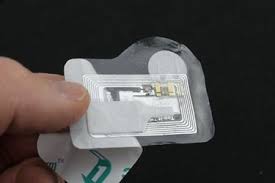
Adhesive backing utilizes hypoallergenic acrylic formulations tested extensively for dermatological compatibility across diverse population segments. Peel-off liners protect tacky surfaces until ready for application on clean, dry torso regions recommended by clinical guidelines. Wireless Bluetooth connectivity transmits real time data streams to paired smartphones running companion analytics software interpreting trends over weeks or months. Rechargeable lithium polymer batteries embedded within ultra-thin form factors sustain multi-day operation between charging cycles.
Motion artifact rejection algorithms distinguish genuine cardiac signals from extraneous noise sources caused by arm movements or breathing rhythms. Calibration routines account for individual variations in skin tone, hair density, and perspiration levels affecting photoplethysmography accuracy. Sleep stage detection capabilities expand utility beyond exercise tracking into holistic wellness assessments monitoring recovery phases essential for athletic training optimization. Data encryption safeguards privacy rights mandated by GDPR and analogous regional legislation frameworks.
Single-use disposables target medical institutions preferring disposable solutions avoiding cross -contamination risks inherent in communal equipment sharing practices. Reusable variants appeal to cost-conscious consumers willing to invest in Long-lasting durability alternatives amortized over several months regular usage patterns. Future iterations envision incorporating electrocardiogram electrodes alongside optical sensors providing richer diagnostic insights comparable to professional cardiology suites. Partnerships with telehealth platforms facilitate remote patient monitoring services bridging gaps between periodic clinic visits and ongoing chronic condition management needs.